
Kaijuka Calls for Clearer Operating Framework for National Housing, Says Government Bureaucracy Hampers Affordable Housing
Kaijuka made the submission on Thursday morning when NHCC officials appeared before the Parliamentary Committee on Commissions, Statutory Authorities and State Enterprises (COSASE) to respond to issues raised in the Auditor General’s report for the financial year ended December 2025.
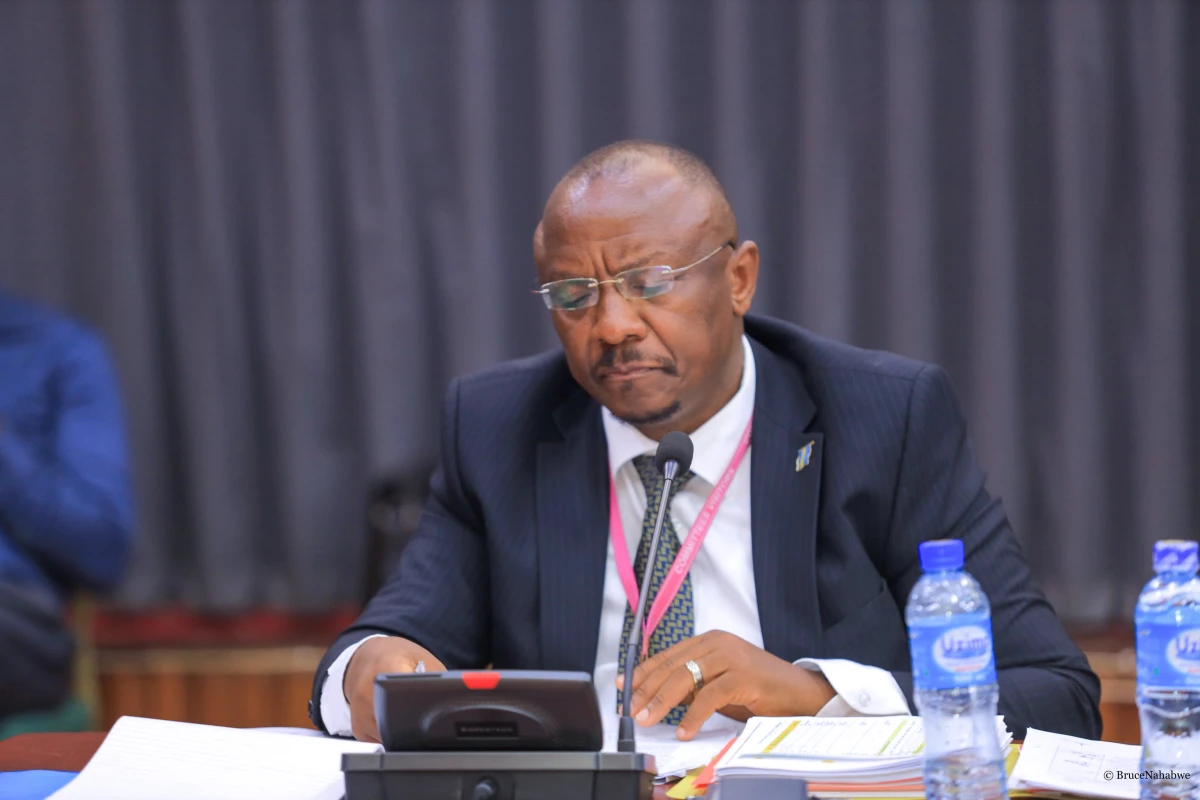
The Chief Executive Officer of National Housing and Construction Company Limited (NHCC), Eng. Kenneth Kaijuka, has called for a review of the company’s operating framework, saying government bureaucratic procedures and restrictions on borrowing are limiting its ability to deliver affordable housing to Ugandans.
Kaijuka made the submission on Thursday morning when NHCC officials appeared before the Parliamentary Committee on Commissions, Statutory Authorities and State Enterprises (COSASE) to respond to issues raised in the Auditor General’s report for the financial year ended December 2025.
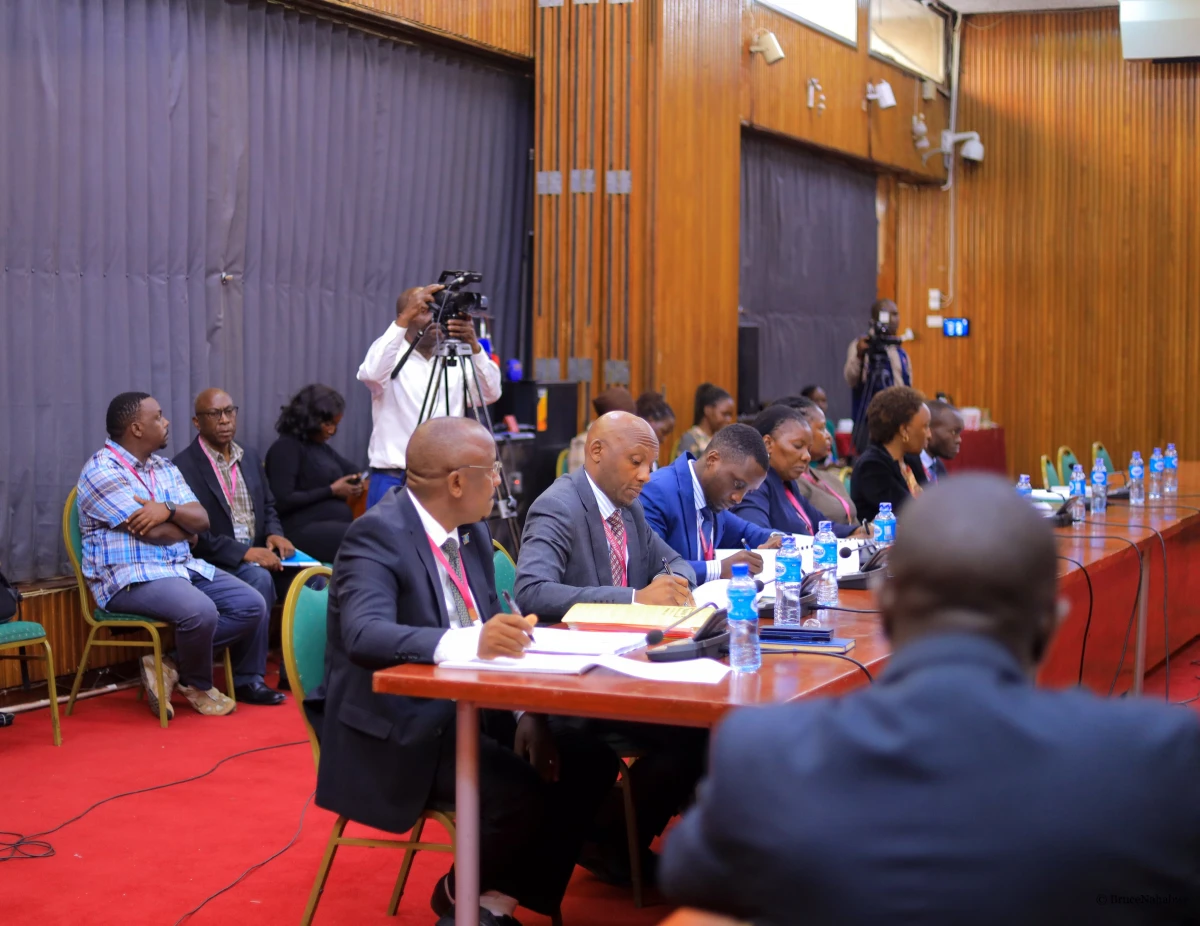
The committee, chaired by Hon. Muwada Nkunyingi, MP for Kyadondo County East, with Hon. George Musisi, MP for Kiira Municipality, as Deputy Chairperson, questioned the company’s borrowing, financing arrangements and other aspects of its operations.
Responding to concerns about NHCC’s borrowing, Kaijuka said the company operates under an unclear framework that sometimes forces it to function like a private commercial entity while simultaneously being subjected to government procedures.
He said the situation creates challenges for a company whose mandate includes providing housing to Ugandans, particularly because property development requires quick decision-making and access to flexible financing.
“We need to be very honest here with the Members of Parliament, that the operating framework of National Housing and Construction sometimes is limited,” Kaijuka told the committee.
He said NHCC frequently encounters conflicts between its commercial operations and government processes and bureaucracies, which he argued can delay business transactions and cause the company to miss viable investment opportunities.
Kaijuka cited land acquisition as one area where delays can affect the company’s ability to secure profitable projects.
He said a private investor who identifies a strategically located piece of land would not normally take several months to complete the purchase because the opportunity could be lost to another buyer.
“We want to declare that indeed, in our daily business and transactions, we get a lot of conflicts with the government processes and bureaucracies,” he said.
Kaijuka urged Parliament to consider whether NHCC should operate fully under private-sector commercial principles or be treated as a government entity, with a corresponding government financing framework.
“Either we are private and we operate on private terms, or we are government and we operate on government terms,” he said.
Bank borrowing limits NHCC's housing options
Kaijuka also explained that much of NHCC’s borrowing is obtained from commercial banks to finance its projects.
He said the nature of bank financing places significant restrictions on the type and location of housing projects the company can undertake because lenders require security and expect projects to generate returns within a predictable period.
According to Kaijuka, once NHCC borrows from a bank, both the project being financed and the land used as security become tied to the lender’s requirements.
He said this has contributed to what he described as a “bank business” approach, where the company has to concentrate on developments that can generate sufficient returns to service commercial loans.
Kaijuka said this limits NHCC’s capacity to construct subsidised housing for lower-income Ugandans.
He proposed that government consider providing access to cheaper or government-backed financing, including borrowing against the government’s balance sheet, to enable the company to undertake projects with longer repayment periods and lower returns.
“In the situation we are operating in, almost as a private entity, we cannot build subsidised houses,” he said.
He argued that affordable housing requires financing arrangements that are different from conventional commercial bank loans.
Kaijuka said Members of Parliament would like to see housing developments in their constituencies, but NHCC cannot effectively meet that demand if it relies entirely on expensive commercial borrowing.
Commercial loans pushing developers towards urban areas
The NHCC CEO further explained that reliance on bank financing also influences where developers choose to build.
He said most private developers concentrate their projects in Kampala and its outskirts because lenders consider such locations less risky, with stronger demand and faster sales.
Projects outside major urban centres, he said, can take longer to sell, meaning developers need patient and relatively cheaper financing to wait for returns.
“If you want to go outside the CBD where they think sales will take longer, then it is a risk. You must have some soft money that you can wait that long,” Kaijuka told the committee.
He said NHCC’s objective is not to make excuses but to develop housing products that respond to the needs of different categories of Ugandans.
“Our goal is not to find excuses. We want to build for Ugandans, look at the different groups, but how do we access funding that will resonate with that kind of development?” he asked.
Kaijuka said NHCC has developed different housing models and remains interested in constructing various categories of houses, but financing remains a critical determinant of what the company can deliver.
Libyan shareholders
The committee also raised questions concerning NHCC’s Libyan shareholders, who hold a 49 per cent stake in the company.
Kaijuka told the MPs that NHCC stopped sharing dividends with the Libyan shareholders, the Libyan African Investment Company (LAICO) following the political turmoil that began in Libya in 2011.
He said the matter had been considered at the company’s most recent Annual General Meeting (AGM), where a decision was taken for the Government of Uganda to engage the Government of Libya at government-to-government level once the political situation in Libya stabilises.
According to Kaijuka, the company has also communicated the matter to relevant government institutions, including the Ministry of Finance, the Attorney General and the Solicitor General.
He said claims relating to the Libyan interest should therefore be handled at the central government level rather than through NHCC's ordinary business operations.
Kaijuka also referred to a historical loan arrangement dating back to 1972 involving the Libyan government and said discussions had been held regarding how the outstanding amount should be treated.
He said calculations based on the time value of money had been undertaken in relation to the historical obligation.
“This submission has been done and all claims will have to go to central government,” Kaijuka said, adding that the AGM decision had been communicated to the relevant government authorities.
NHCC seeks policy clarity
Kaijuka’s appearance before COSASE comes as Parliament scrutinises the performance and financial management of state enterprises based on the Auditor General’s report for the year ended December 2025.
His submissions placed the company’s financial challenges within a broader debate over the role of state-owned enterprises that are expected to operate commercially while also fulfilling social and national development objectives.
He argued that NHCC cannot simultaneously be expected to compete with private developers using commercial bank financing and deliver subsidised or affordable housing without access to concessional financing.
Kaijuka therefore called for a clearer financing and operational framework that would allow NHCC to pursue housing developments beyond the most commercially attractive locations.
He said access to cheaper, longer-term financing would enable the company to expand its housing programme to different parts of the country and serve Ugandans across various income groups.
The CEO further told the committee that NHCC remains willing to engage COSASE outside the formal proceedings and demonstrate how its borrowing arrangements are being utilised in its projects.
He invited the committee to examine the company's projects and financing model in detail to better understand the relationship between bank borrowing, land acquisition, project development and the final cost of housing.
The COSASE engagement is part of Parliament’s ongoing scrutiny of public enterprises and their financial performance, with NHCC expected to account for the issues highlighted in the Auditor General’s report and respond to questions from lawmakers on its operations and financial obligations.

John Kusolo is a Pastor, Sports Enthusiast and Ugandan journalist with Nile Chronicles News (NCN). With a strong commitment to journalistic excellence, he is recognized for his dedication, goal-oriented approach, and ability to thrive in challenging environments. Kusolo brings focused motivation and professionalism to his reporting and media assignments.














Comments (0)