
Agriculture Committee Unveils Ambitious Oversight Agenda to Strengthen Sector Performance
The meeting marked the beginning of the committee's oversight activities, with members committing to closely monitor government programmes and interventions aimed at transforming Uganda's agriculture sector.
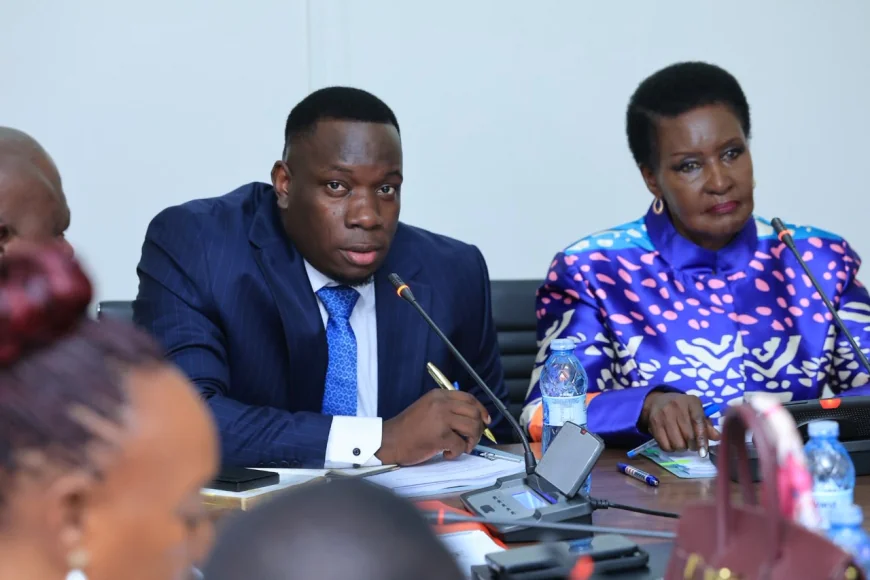
The Parliamentary Committee on Agriculture, Animal Industry and Fisheries has held its maiden meeting under the leadership of Chairperson Hon. Amelia Kyambadde, the Member of Parliament for Mawokota North, and Deputy Chairperson Hon. Derrick Orone, the Member of Parliament for Gogonyo County, where members discussed and adopted the committee's work plan for the new parliamentary session.
The meeting marked the beginning of the committee's oversight activities, with members committing to closely monitor government programmes and interventions aimed at transforming Uganda's agriculture sector.
Speaking during the meeting, Hon. Kyambadde said the committee intends to strengthen parliamentary oversight by going beyond desk reviews and reports to undertake regular field inspections and on-site verification of government programmes and projects.
She noted that direct engagement with farmers, local leaders, extension workers and implementing agencies will enable the committee to obtain first-hand information on the performance of agricultural initiatives and identify challenges affecting service delivery.
"The agriculture sector remains the backbone of Uganda's economy and employs the majority of our population. As a committee, we are committed to ensuring that government programmes and resources intended to improve agricultural production and farmers' livelihoods achieve their intended objectives," Hon. Kyambadde said.
She emphasized that field visits will allow legislators to assess the actual impact of government investments in agriculture and make informed recommendations to Parliament and relevant ministries.
The committee also underscored the importance of accountability and value for money in the implementation of programmes under the Ministry of Agriculture, Animal Industry and Fisheries and its affiliated agencies.
Deputy Chairperson Hon. Derrick Orone reiterated the committee's commitment to working collaboratively with all stakeholders to address challenges facing the sector, including limited access to markets, inadequate agricultural infrastructure, climate change effects, animal diseases and post-harvest losses.
He said the committee's work plan will focus on ensuring that government interventions are effectively implemented and that resources allocated to agriculture directly benefit farmers and farming communities.
"Our responsibility is to ensure that every government programme and every shilling appropriated to the sector translates into improved productivity, increased incomes and better livelihoods for our people," Hon. Orone said.
Committee members also agreed to prioritise monitoring key government programmes, including agricultural extension services, irrigation schemes, livestock and fisheries projects, agro-industrialisation initiatives and programmes aimed at promoting commercial agriculture.
The legislators further pledged to engage with stakeholders across the country to gather views and recommendations that can inform policy decisions and legislative interventions in the agriculture sector.
Uganda's agriculture sector remains a critical pillar of the economy, contributing significantly to employment, food security and export earnings. However, the sector continues to face challenges such as climate change, inadequate financing, pests and diseases, limited mechanisation and fluctuating market prices.
The committee's decision to intensify field inspections and on-site verification is expected to enhance accountability and improve the implementation of government programmes designed to transform agriculture and improve the livelihoods of millions of Ugandans who depend on the sector.
With its work plan now adopted, the Committee on Agriculture, Animal Industry and Fisheries is set to embark on its oversight activities, with expectations that its interventions will contribute to increased efficiency, better policy implementation and sustainable growth in Uganda's agriculture sector.

John Kusolo is a Pastor, Sports Enthusiast and Ugandan journalist with Nile Chronicles News (NCN). With a strong commitment to journalistic excellence, he is recognized for his dedication, goal-oriented approach, and ability to thrive in challenging environments. Kusolo brings focused motivation and professionalism to his reporting and media assignments.












Comments (0)