More Than 1.6 Million Candidates: UNEB Executive Director Odongo Unveils 2026 Examination Preparations
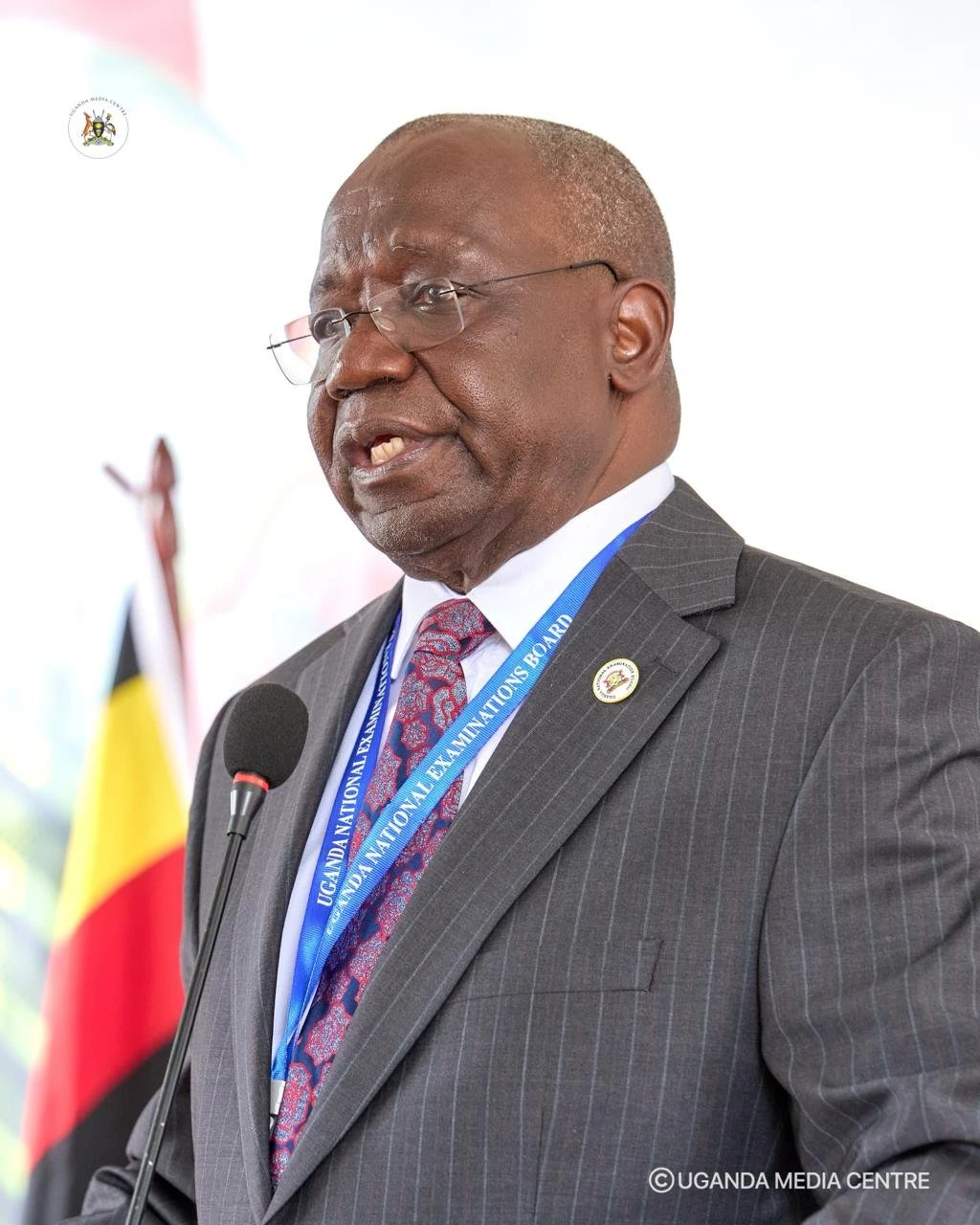
KAMPALA – The Uganda National Examinations Board (UNEB) has registered 1,627,885 candidates for the 2026 national examinations, representing a 14.9 per cent increase from the 1,416,448 candidates registered in 2025.
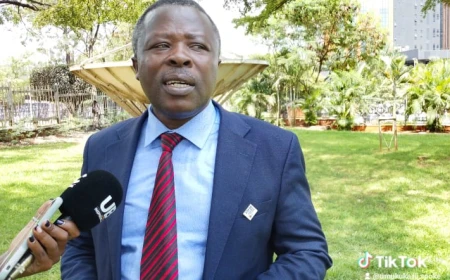
UNEB Executive Director Dan Odongo Nokrach disclosed the provisional candidature figures while addressing the press at the Uganda Media Centre, where he also outlined preparations for the 2026 Primary Leaving Examination (PLE), Uganda Certificate of Education (UCE) and Uganda Advanced Certificate of Education (UACE).
According to Odongo, the increase in candidature has been recorded across all three examination levels and could be attributed to improved completion rates, with more learners remaining in school and progressing to the next level of education.
Of the total registered candidates, 52 per cent are female and 48 per cent are male, while 52 per cent of the candidates are sponsored by government under the Universal Education programmes at primary and secondary levels.
UNEB has also registered 6,090 Special Needs Education (SNE) learners among the 2026 candidates.
At PLE level, candidature has increased from 818,885 candidates in 2025 to 920,796 in 2026, representing a 12.4 per cent increase.
At UCE level, the number has risen from 432,163 in 2025 to 503,214 candidates in 2026, an increase of 16.4 per cent.
The sharpest increase has been recorded at UACE, where candidature has risen from 166,400 in 2025 to 203,875 candidates in 2026, representing a 22.5 per cent increase.
Odongo noted that UNEB has particularly observed a significant increase in candidature in the traditional science subjects at UACE.
Schools yet to register candidates
Odongo said UNEB had identified schools and examination centres that presented candidates for examinations in 2025 but have not registered candidates for the 2026 examinations.
He said the Board is conducting a final verification exercise and intends to publish the list of such schools and centres in both print and electronic media by September 30, 2026.
The publication, he said, will enable parents and guardians to establish the registration status of candidates in schools that have previously presented learners for national examinations.
UNEB is also urging candidates to verify their registration details before the examination period.
Odongo said candidates who identify anomalies in their registration data should immediately inform their school authorities so that the information can be corrected by UNEB.
He further urged candidates who paid registration fees within the stipulated deadlines but discover that they were not registered to notify the Board immediately, using proof of payment to support their claims.
Heads of examination centres have also been asked to thoroughly cross-check registration information before signing and stamping the final records.
Candidate registers to remain on display
Odongo reminded schools that the display of candidates' registers is continuing until October 7, 2026, in accordance with the UNEB Act.
He said examination centres are required to display candidates' lists in conspicuous places on school noticeboards to enable candidates to confirm their registration status and verify their personal details.
Candidates are expected to check the correctness and order of their names, date of birth, gender, quality of their photographs, and the subjects and papers registered for, particularly at UCE and UACE levels.
After verifying their details, candidates are required to sign a parallel register to confirm that the registration information is correct.
UNEB warns against examination-related indiscipline
Odongo also cautioned candidates against engaging in acts of indiscipline during the examination period.
He said being registered as an examination candidate does not exempt learners from complying with school rules and regulations.
UNEB, he said, would not support candidates who are suspended or dismissed by their schools as a result of indiscipline.
The Executive Director also appealed to parents to provide adequate guidance to their children as they prepare for the national examinations.
Warning over false SNE declarations
UNEB has also raised concern over what Odongo described as the reporting of non-existent Special Needs Education cases by some heads of examination centres, particularly at primary level.
He said some school heads have either deliberately or inadvertently misreported the nature of disabilities of candidates, particularly in cases involving dyslexia and low vision.
According to Odongo, such misreporting is intended to secure additional examination time or access to a transcriber for candidates who may not qualify for those accommodations.
He also raised concern over the misuse of sign-language interpreters, including situations where interpreters are allegedly asked to interpret examination questions.
Odongo warned that such practices provide candidates with an unfair advantage and have contributed to a rapid increase in the number of SNE candidates, consequently increasing the number of personnel UNEB must deploy during examinations.
He called upon heads of examination centres to stop submitting inaccurate SNE information and ensure that all declarations regarding candidates' disabilities are genuine and properly documented.
2026 examinations to begin in October
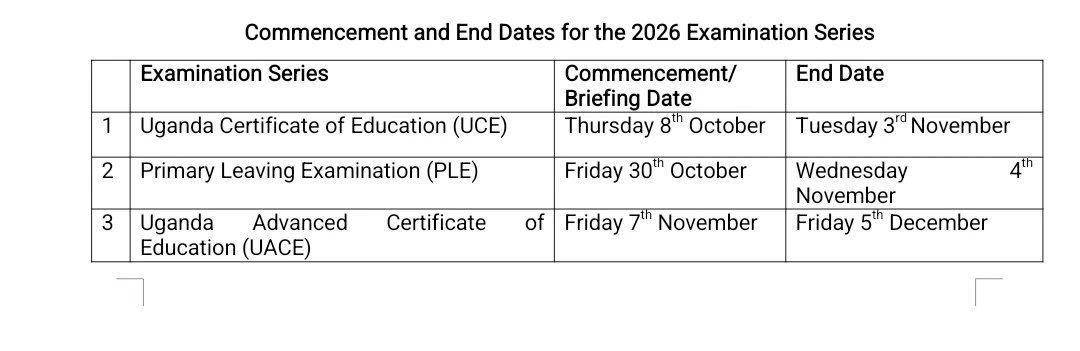
The 2026 national examination cycle will officially commence with the briefing of UCE candidates on Thursday, October 8, 2026.
PLE activities will begin with the briefing of candidates on Friday, October 30, 2026, while UACE will commence with candidate briefing on Friday, November 6, 2026.
The 2026 UCE candidates constitute the third cohort to be assessed under the Competency-Based Curriculum (CBC) at lower secondary level.
The 2026 UACE candidates were among the pioneer cohorts to undertake the CBC at lower secondary level and will consequently be assessed under a curriculum and assessment system aligned to the competency-based approach.
UNEB releases examination timetables
Odongo said heads of examination centres can access the examination timetables through their respective school portals.
UNEB has also supplied hard copies of the timetables alongside other examination stationery.
Schools have been instructed to ensure that every UCE and UACE candidate receives a copy of the relevant timetable and that the timetables are displayed on school noticeboards for candidates, parents and other interested parties.
The timetables will also be accessible through the UNEB website and the Board's official social media platforms.
Braille versions of the UCE and UACE timetables have also been provided for candidates with visual impairments.
2026 examination theme
The theme for the 2026 national examinations is: “Advancing Excellence in Assessment and Certification through Secure, Credible, Inclusive and Innovative Processes.”
Odongo said the theme reflects UNEB's commitment to continually improving the quality of its assessment and certification processes.
He emphasised that examination security and credibility remain central to the conduct of national assessments, noting that stakeholders must have confidence in the integrity of the examination process.
The theme also recognises the participation of learners with special educational needs and the importance of providing appropriate accommodations to mitigate the effects of disabilities during assessment.
Odongo said innovation would also remain an important component of UNEB's approaches to assessment and certification.
With more than 1.6 million candidates registered for the 2026 examinations, UNEB is now entering the final phase of preparations for one of the country's largest annual assessment exercises, as schools, candidates and parents are urged to verify registration details and complete all preparations ahead of the October and November examinations.

John Kusolo is a Pastor, Sports Enthusiast and Ugandan journalist with Nile Chronicles News (NCN). With a strong commitment to journalistic excellence, he is recognized for his dedication, goal-oriented approach, and ability to thrive in challenging environments. Kusolo brings focused motivation and professionalism to his reporting and media assignments.












Comments (0)