
‘Whoever Feeds You Controls You’: Mafabi Pushes Law to Transform Uganda’s Smallholder Farmers
Mafabi formally presented the motion under Item 6 of Parliament’s business, calling for Government to develop and enact a legal framework for the National Smallholder Farmers Transformation and Climate Resilience Programme.
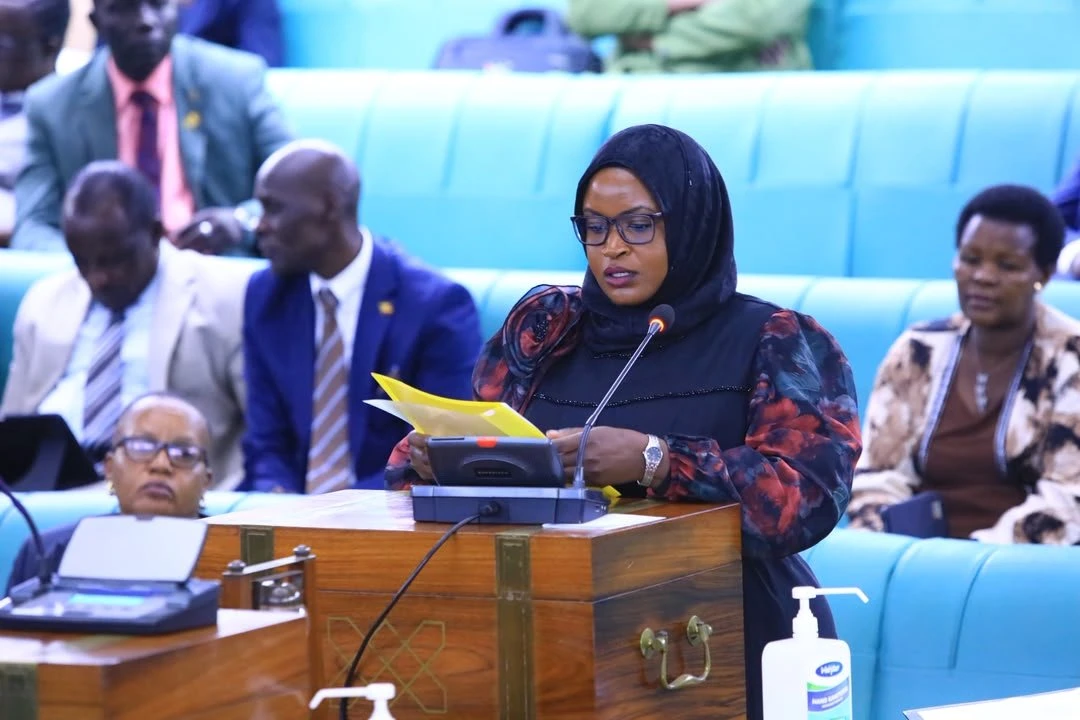
Sironko District Woman Representative Hon. Asha Mafabi Nabulo has called for the establishment of a strong legal framework to support smallholder farmers and strengthen Uganda’s capacity to produce enough food for its population and the wider East and Central African region.
Mafabi made the call while presenting Item 6 before Parliament yesterday, where she moved a motion urging Government to develop and enact a legal framework for the National Smallholder Farmers Transformation and Climate Resilience Programme.
The motion, which was subsequently moved and seconded, seeks to provide a more structured approach to transforming Uganda’s predominantly smallholder farming sector while addressing the growing effects of climate change on agricultural production.
Mafabi argued that empowering smallholder farmers should not only be viewed as an agricultural intervention but as a matter of national interest, patriotism and national security.
“I am convinced that the issue of smallholder farmers integrated with climate resilience, it is a discussion of patriotism, it is a discussion of security, national security,” Mafabi told Parliament.
She linked food production to national security, warning that countries that cannot adequately feed their populations remain vulnerable to external dependence.
Quoting the saying, “Whoever feeds you controls you,” Mafabi said Uganda must deliberately invest in its farmers to ensure that the country can produce sufficient food for itself and become a major food supplier to neighbouring countries.
“If we implement this programme successfully, I believe Uganda will be able to feed the whole of East and Central Africa,” she said.
Uganda can export food as it exports peace
Mafabi drew a comparison between Uganda’s role in regional peace and security and the country’s potential to become a major food exporter.
She noted that significant resources had been invested in strengthening Uganda’s security architecture, which she said had enabled the country to play an important role in promoting peace beyond its borders.
“A lot of money was pumped into security. And right now, Uganda is the number one exporter of peace in Africa,” Mafabi said.
She challenged the country to apply a similar level of commitment to empowering smallholder farmers.
“I would want us to also champion this smallholder empowerment programme, so that again we become the number one exporter of food in the whole of Africa,” she added.
Her argument places agriculture alongside security as a strategic national priority, with food production viewed not simply as an economic activity but as an important component of national resilience.
Legal framework for smallholder transformation
Mafabi’s motion calls for Government to establish a legal foundation for the National Smallholder Farmers Transformation and Climate Resilience Programme, rather than relying solely on policy initiatives and individual agricultural programmes.
She argued that a dedicated legal framework would help provide greater coordination and continuity in interventions targeting smallholder farmers.
Uganda’s agricultural sector is largely dominated by smallholder farmers, many of whom depend on rain-fed agriculture and therefore remain vulnerable to prolonged droughts, floods, changing rainfall patterns, pests and other effects associated with climate change.
Mafabi’s proposal seeks to place climate resilience at the centre of efforts to transform the sector.
According to her argument, supporting farmers to adapt to changing climatic conditions is essential if Uganda is to achieve sustainable increases in food production.
Food security and national security
Mafabi further presented food security as an integral part of national security.
She maintained that a country that has the capacity to feed its people is better positioned to withstand external shocks and maintain its independence.
Her call therefore goes beyond increasing agricultural output to strengthening Uganda’s ability to determine its own food future.
She urged Parliament and Government to look at smallholder farmers as strategic actors in Uganda’s economic and security agenda and to create an enabling environment for them to move from subsistence production to commercially viable and climate-resilient farming.
The proposed programme would, in this context, seek to empower farmers while ensuring that agricultural production remains sustainable despite the changing climate.
Uganda’s regional food potential
Mafabi also placed Uganda’s agricultural potential within the broader East and Central African market.
With its sizeable agricultural sector and favourable conditions for the production of various food crops, she believes Uganda can produce enough not only for domestic consumption but also for export to neighbouring countries.
She said successful implementation of the smallholder transformation programme could enable Uganda to feed much of the region.
Her vision would see farmers benefiting from deliberate government interventions while Uganda strengthens its position as a regional food basket.
Motion moved and seconded
Mafabi formally presented the motion under Item 6 of Parliament’s business, calling for Government to develop and enact a legal framework for the National Smallholder Farmers Transformation and Climate Resilience Programme.
The motion was moved and seconded, paving the way for parliamentary consideration of the proposal.
The development comes at a time when the Government continues to promote agricultural commercialisation, household income generation and programmes aimed at moving farmers away from subsistence agriculture.
For Mafabi, however, the next step should be to provide a comprehensive legal framework that brings together smallholder farmer empowerment and climate resilience as part of a broader national transformation agenda.
She believes such an approach could strengthen Uganda’s food security, protect farmers from climate-related disruptions and unlock the country’s potential to become one of Africa’s leading food producers and exporters.
Mafabi’s presentation therefore placed smallholder farmers at the centre of a wider national conversation—linking agriculture to patriotism, economic transformation, climate resilience and national security.

John Kusolo is a Pastor, Sports Enthusiast and Ugandan journalist with Nile Chronicles News (NCN). With a strong commitment to journalistic excellence, he is recognized for his dedication, goal-oriented approach, and ability to thrive in challenging environments. Kusolo brings focused motivation and professionalism to his reporting and media assignments.














Comments (0)