
Nakiyi Warns Uganda Airlines Has Become a Cost Center, Calls for Greater Accountability
Nakiyi made the remarks on Monday, August 24, 2026, while making his submission before the Parliamentary Committee on Statutory Authorities and State Enterprises (COSASE), which was scheduled to scrutinise the performance and operations of Uganda Airlines.
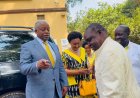
Budadiri East Member of Parliament Hon. Eng. Julius Nakiyi has raised concern over the financial performance and accountability of Uganda Airlines, arguing that the national carrier is increasingly becoming a cost center and placing a heavy burden on taxpayers.
Nakiyi made the remarks on Monday, August 24, 2026, while making his submission before the Parliamentary Committee on Statutory Authorities and State Enterprises (COSASE), which was scheduled to scrutinise the performance and operations of Uganda Airlines.
The legislator criticised the failure by the airline’s management to appear before the committee, stressing that public institutions financed by taxpayers should be open to parliamentary scrutiny and public accountability.
“We cannot say they come without the media because we cannot promote open governance,” Nakiyi said, emphasising the importance of transparency in the management of public investments.
He argued that Uganda Airlines is ultimately a public investment and that Ugandans, as taxpayers, have a legitimate interest in knowing how the airline is performing.
“We need to have an open government because this is an investment for the public. It is important that the people who invest know how their company is doing,” he said.
Nakiyi questioned whether maintaining a national airline remains economically justified if the enterprise continues to consume substantial public resources without generating sufficient returns.
“It is not a must that we must own Uganda Airlines,” he said, noting that several countries operate without national airlines and have continued to develop their economies.
According to Nakiyi, the key consideration should be whether the airline makes economic sense and delivers value to Ugandans rather than maintaining it simply because it is a national carrier.
His concerns come against the background of significant public investment in Uganda Airlines. Ugandans have invested approximately Shs2 trillion in the airline as capital, according to figures cited during the discussion, while about Shs1.4 trillion has reportedly been eroded by accumulated losses.
This would leave the airline with a net worth of approximately Shs660 billion.
Nakiyi warned that continued losses could divert resources from other sectors that are already facing significant funding needs.
He said Uganda's domestic revenue is insufficient to meet all the country's development priorities, making it necessary for government to carefully assess enterprises that continue to require substantial financial support.
“If it continues to drain and doesn't make economic sense, you will find that it is easier” to reconsider the investment, he argued.
The Budadiri East legislator specifically pointed to education and health as sectors that could benefit from resources being absorbed by loss-making public enterprises.
He said continued financial support to an enterprise that does not demonstrate a clear path to sustainability raises questions about whether taxpayers are receiving value for their investment.
Nakiyi's submission therefore centred on the need for Parliament to establish the true financial position of Uganda Airlines, understand the causes of its losses and determine whether the national carrier can become commercially sustainable.
He also called for greater transparency in the management of the airline, arguing that accountability should not be restricted to parliamentary committees but should extend to the wider public whose taxes finance government investments.
The COSASE scrutiny provides Parliament with an opportunity to examine the airline's financial performance, operational efficiency, management decisions and long-term sustainability.
For Nakiyi, the central question is whether Uganda Airlines can justify the continued allocation of public resources at a time when the country faces competing demands in education, healthcare and other essential services.
His intervention adds to the broader debate over the role of state-owned enterprises in Uganda and whether continued government financing of loss-making entities represents the best use of limited public resources.
The legislator maintained that national pride should not replace economic rationality, insisting that public investments must ultimately be assessed on their ability to deliver value to citizens.
As COSASE continues its scrutiny, the financial performance of Uganda Airlines is expected to remain a major issue, particularly regarding the approximately Shs2 trillion invested in the carrier, the reported Shs1.4 trillion in losses and the sustainability of the remaining public investment.

John Kusolo is a Pastor, Sports Enthusiast and Ugandan journalist with Nile Chronicles News (NCN). With a strong commitment to journalistic excellence, he is recognized for his dedication, goal-oriented approach, and ability to thrive in challenging environments. Kusolo brings focused motivation and professionalism to his reporting and media assignments.












Comments (0)