
President Museveni Chairs Final Cabinet Meeting, Hails Team for Steering Uganda to Middle-Income Status
In a message reflecting both gratitude and reflection, the President later hosted Cabinet members to a luncheon at State House, commending them for their dedication, discipline, and collective commitment to national service. The occasion served not only as a formal farewell but also as recognition of what the administration describes as a transformative period for the country.
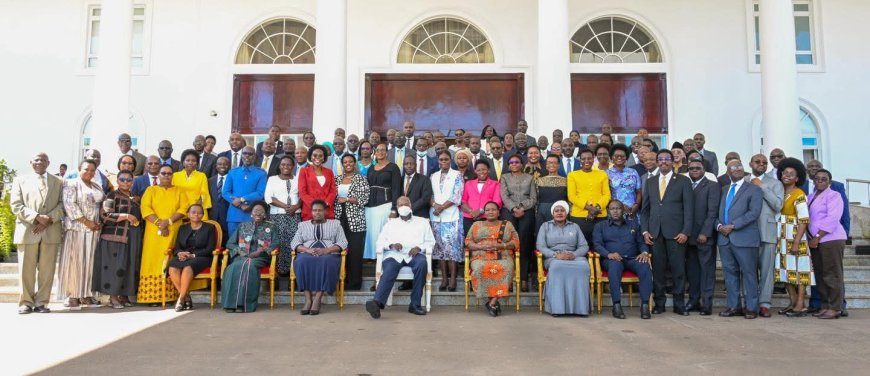
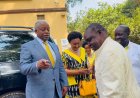
President Yoweri Kaguta Museveni has presided over the final Cabinet meeting of the outgoing government, marking the close of a significant chapter in Uganda’s governance and development trajectory.
In a message reflecting both gratitude and reflection, the President later hosted Cabinet members to a luncheon at State House, commending them for their dedication, discipline, and collective commitment to national service. The occasion served not only as a formal farewell but also as recognition of what the administration describes as a transformative period for the country.
“This is the Cabinet that ushered Uganda into middle-income status,” President Museveni noted, attributing the milestone to coordinated policy implementation, economic reforms, and sustained political stability. He extended appreciation to all ministers and technical teams who contributed to this achievement, emphasizing the importance of teamwork in government.
Uganda’s transition to lower middle-income status has been a central pillar of the government’s narrative in recent years. The classification, largely based on Gross National Income per capita benchmarks set by global financial institutions, reflects progress in sectors such as infrastructure development, industrialization, and services expansion. However, it has also sparked ongoing debate among economists and policy analysts regarding income distribution, cost of living, and the lived realities of ordinary citizens.
During the meeting, President Museveni also singled out the Cabinet Secretariat for its role in ensuring the smooth coordination of Cabinet business. The Secretariat, which is responsible for organizing meetings, managing documentation, and following up on decisions, was praised for maintaining efficiency and continuity in government operations.
The outgoing Cabinet has overseen a wide range of initiatives, including investments in road infrastructure, energy generation, digital transformation, and agricultural modernization. Flagship programs such as the Parish Development Model (PDM) and Emyooga have aimed to extend economic participation to grassroots communities, though their impact continues to be assessed.
Political observers note that such a concluding Cabinet session is both procedural and symbolic—offering an opportunity to review achievements, acknowledge challenges, and set the tone for transition. It also provides a platform for reinforcing unity within the ruling establishment ahead of a new governmental cycle.
President Museveni concluded his remarks by thanking all members for their service and wishing them well in their future endeavors, signaling both closure and continuity within Uganda’s leadership framework.
As the country prepares for the next phase of governance, attention is expected to shift toward the composition of the incoming Cabinet, policy priorities, and how the government intends to consolidate and expand upon the gains cited by the outgoing team.

John Kusolo is a Pastor, Sports Enthusiast and Ugandan journalist with Nile Chronicles News (NCN). With a strong commitment to journalistic excellence, he is recognized for his dedication, goal-oriented approach, and ability to thrive in challenging environments. Kusolo brings focused motivation and professionalism to his reporting and media assignments.













Comments (0)