
Government Raises Public Service Wage Bill to UGX 9.708 Trillion, Tightens Recruitment Controls
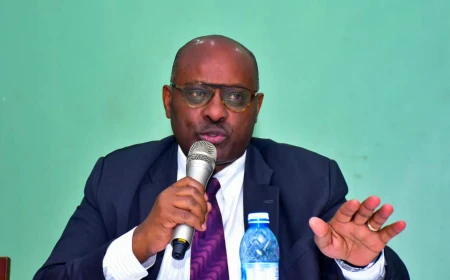
Speaking during a press briefing held on 2nd July 2026 at the Uganda Media Centre, Gen. Katumba Wamala released Circular Standing Instructions/Establishment Notice No. 3 of 2026, describing the document as a major policy instrument that will guide the management of Uganda's Public Service throughout the financial year.

The Minister of Public Service, Gen. Edward Katumba Wamala, has unveiled a comprehensive set of Human Resource Management guidelines for the 2026/2027 Financial Year, outlining far-reaching reforms aimed at strengthening discipline, improving service delivery, modernizing human resource management, and preparing the country's public workforce for a new pension regime.
Speaking during a press briefing held on 2nd July 2026 at the Uganda Media Centre, Gen. Katumba Wamala released Circular Standing Instructions/Establishment Notice No. 3 of 2026, describing the document as a major policy instrument that will guide the management of Uganda's Public Service throughout the financial year.
The Minister said the guidelines are part of the Government's broader reform agenda aimed at building a professional, accountable, efficient, citizen-centred and responsive Public Service capable of delivering quality services to Ugandans.
"As a newly deployed Minister in this important Ministry, I reaffirm Government's commitment to building a Public Service that is professional, efficient, accountable, citizen-centred, and responsive to the needs of the people of Uganda," Gen. Katumba Wamala said.
He explained that the Ministry of Public Service remains central in ensuring that Government institutions are properly structured, adequately staffed, performance-driven and equipped to deliver quality public services.
According to the Minister, the Establishment Notice goes beyond routine administrative guidance, instead serving as a key reform document covering payroll management, wage bill controls, pension administration, gratuity, performance management, human resource development, records management, organizational structures and other critical human resource functions.
Government Increases Public Service Wage Bill
One of the key highlights of the new guidelines is the significant increase in the Government wage bill.
Gen. Katumba Wamala revealed that Government has appropriated UGX 9.708 trillion for the Public Service wage bill for the 2026/2027 Financial Year, representing an increase of UGX 1.088 trillion from the UGX 8.621 trillion allocated in FY 2025/2026.
He noted that the wage bill has more than doubled since FY 2018/2019, when Government adopted the current long-term salary enhancement policy and the wage allocation stood at approximately UGX 4.2 trillion.
The increased allocation will finance existing employees, facilitate recruitment into critical vacant positions and implement the next phase of Government's salary enhancement programme.
Among the beneficiaries of the salary enhancement are Deputy Chief Administrative Officers, Deputy City Town Clerks, City Division Town Clerks, Assistant Commissioners, Heads of Department in Local Governments, public officers on Salary Scale U2, primary school Head Teachers, Deputy Head Teachers, Senior Education Assistants and Education Assistants, secondary school teachers with humanities backgrounds, TVET heads and instructors in humanities, as well as specialised technical staff including Ferry Captains, Ferry Operators, Grader Operators, Mortuary Attendants and X-ray Attendants.
The Minister assured other public servants that those not covered under the current phase will benefit during the 2027/2028 Financial Year.
"We have kept the promise to enhance salaries in phases and certainly, we shall do," he emphasized.
Strict Recruitment Controls Introduced
Despite the increased wage allocation, Gen. Katumba Wamala stressed that Government will maintain strict discipline in recruitment.
He announced that all recruitment during FY 2026/2027 must first receive clearance from the Ministry of Public Service after confirmation of available wage provisions and approved vacancies.
He warned that individuals recruited without proper authorization will not be added onto the Government payroll.
The Minister also directed Accounting Officers with approved structures and available wage budgets to immediately seek recruitment clearance to avoid returning unspent wage allocations while simultaneously creating employment opportunities for Ugandans.
Public Service Pension Fund Begins Implementation
Another major reform announced is the operationalization of the Public Service Pension Fund under the Public Service Pension Fund Act, 2025, which repealed the previous Pensions Act.
Gen. Katumba Wamala explained that the new Fund establishes a contributory pension scheme covering public officers appointed on permanent and pensionable terms, including officers in Ministries, Local Governments, the teaching service, health service, Police and Prisons.
He reassured both serving officers and pensioners that the reforms are intended to strengthen retirement security rather than reduce benefits.
According to the Minister, pensioners who retired under the previous scheme will continue receiving their pensions directly from Government through the Consolidated Fund.
Meanwhile, serving officers transitioning into the new scheme will have their accrued pension rights protected through Government Retirement Bonds, which will be redeemed upon retirement.
Government contributions to the Fund will begin on 1st July 2027, with employers contributing 10 percent while employees contribute 5 percent.
To facilitate implementation, all Responsible Officers have been directed to immediately update employee records on the Human Capital Management (HCM) System, including National Identification Numbers, dates of birth, appointment dates and other personnel information.
Agencies Ordered to Harmonize Human Resource Policies
The Minister further directed all Government Agencies, Boards and Commissions to align their Human Resource Manuals with national Public Service standards.
No new HR policy will be implemented unless it receives review by the Public Service Commission, technical clearance from the Ministry of Public Service, legal clearance from the Ministry of Justice and Constitutional Affairs and final Cabinet approval.
Existing Human Resource Manuals must be submitted for verification and harmonization within 30 days beginning 1st July 2026.
Shift to Digital Performance Management
Government is also introducing major reforms in performance management.
Gen. Katumba Wamala announced that the Public Service is abandoning traditional performance appraisal methods in favour of the Balanced Scorecard Framework, fully integrated within the Human Capital Management System.
Under the new arrangement, appointing authorities will no longer accept manual appraisal reports for promotions, confirmations or contract renewals.
The Minister said the reform will improve accountability by objectively linking individual performance to institutional results.
Better Service Delivery Through Client Charters
The Establishment Notice also strengthens citizen engagement by requiring all Ministries, Departments, Agencies and Local Governments to prepare five-year Client Charters aligned with the Fourth National Development Plan.
Public health facilities have similarly been directed to display Patient Charters consistent with Ministry of Health service standards, enabling citizens to clearly understand the quality of services they should expect.
Strategic Capacity Building Introduced
Government is institutionalizing strategic workforce planning across the Public Service.
Every Government institution will now be required to prepare annual Human Resource Plans, conduct training needs assessments and develop five-year capacity-building strategies.
Funding for staff training will only be approved where institutions have verified and approved capacity-building plans aligned to national development priorities.
Digital Records Management Prioritized
The Minister also directed all Ministries, Departments, Agencies and Local Governments to adopt the Electronic Document and Records Management System (EDRMS) as the official platform for managing Government records.
Institutions have been instructed to gradually eliminate paper-based and standalone records systems while strengthening information security through improved access controls, audit trails, digital signatures and compliance with data protection requirements.
RAPEX Implementation to Continue
Gen. Katumba Wamala reaffirmed that the Ministry remains the sole authority responsible for approving Government institutional structures, staffing norms and job specifications.
He directed Ministries implementing the Rationalization of Government Agencies and Public Expenditure (RAPEX) programme to expedite staff absorption, payment of terminal benefits and completion of pending legislative processes.
Progress reports must be submitted to the Ministry before the end of August 2026.
Service Uganda Centres to Improve Access
Government is also accelerating establishment of Service Uganda Centres, which will bring multiple public services under one roof.
Working together with the National Information Technology Authority-Uganda, Government is remodelling selected office buildings into regional service hubs.
The first regional centres in Kampala, Mbarara, Gulu and Tororo are expected to become operational within the planned implementation period.
The initiative is intended to make Government services more accessible, convenient and citizen-centred.
Local Government Structures Under Review
The Minister further announced that Government will continue the nationwide review of Local Government structures.
The exercise, which began following the last structural reviews conducted in 2016 for districts, municipalities and town councils and in 2022 for cities, will continue until June 2027.
Local Governments have been instructed to submit staffing challenges and structural concerns for consideration during the review process.
Civil Service College to Strengthen Professional Development
The Civil Service College Uganda will continue supporting induction programmes, professional development, leadership training, research, strategic planning, procurement, budgeting, communication and gender-responsive planning for public officers.
Newly recruited officers will be required to undergo mandatory induction training before assuming their responsibilities.
Minister Calls for Full Compliance
In his concluding remarks, Gen. Katumba Wamala described Establishment Notice No. 3 of 2026 as a clear roadmap for transforming Uganda's Public Service.
He said the reforms will strengthen discipline in recruitment and wage management, prepare the country for pension reforms, improve performance management, modernize records systems, harmonize human resource policies, professionalize public service cadres and enhance service delivery.
The Minister called upon Accounting Officers, Responsible Officers, Heads of Human Resource, Service Commissions, Local Governments, Agencies, Boards and Commissions to study the Establishment Notice carefully and ensure its full implementation within the stipulated timelines.
He reaffirmed that the Ministry of Public Service will continue providing technical guidance, monitoring compliance and supporting institutions throughout the implementation of the reforms.
"The Ministry of Public Service will continue to provide technical guidance, monitor compliance, and support institutions to implement these reforms in a coordinated and practical manner," Gen. Katumba Wamala said, adding that the detailed Circular Standing Instructions/Establishment Notice No. 3 of 2026 will be issued shortly.

John Kusolo is a Pastor, Sports Enthusiast and Ugandan journalist with Nile Chronicles News (NCN). With a strong commitment to journalistic excellence, he is recognized for his dedication, goal-oriented approach, and ability to thrive in challenging environments. Kusolo brings focused motivation and professionalism to his reporting and media assignments.















Comments (0)