
MUBS Launches Strategic Plan 2026–2030 to Transform into Global Innovative Institution
Launched under the theme “Transforming into a Global Innovative Institution for Business and Management Education, Research and Training,” the five-year strategy outlines key priorities designed to strengthen teaching, research, innovation, infrastructure, and partnerships while aligning the institution with Uganda’s national development agenda.

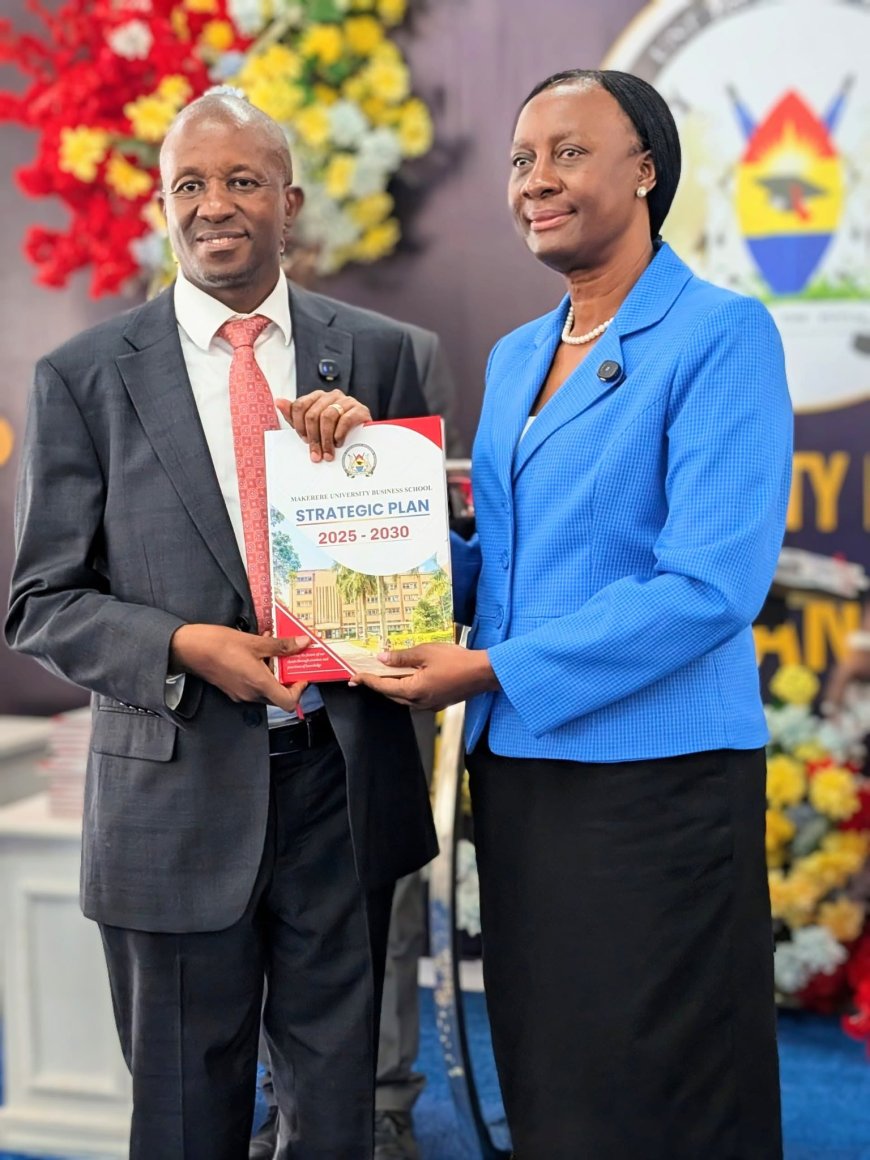
Makerere University Business School (MUBS) has officially unveiled its Strategic Plan 2026–2030, setting out an ambitious roadmap aimed at transforming the institution into a globally competitive centre for business and management education.
Launched under the theme “Transforming into a Global Innovative Institution for Business and Management Education, Research and Training,” the five-year strategy outlines key priorities designed to strengthen teaching, research, innovation, infrastructure, and partnerships while aligning the institution with Uganda’s national development agenda.
Speaking during the launch, MUBS Principal Prof. Moses Muhwezi said the strategic plan represents a deliberate effort by the institution to reposition itself as a modern, innovation-driven academic centre capable of producing graduates equipped with practical skills and global competencies.
He explained that the strategy focuses on several core pillars that will guide the institution’s transformation over the next five years.
Strengthening Teaching and Student Success
A central focus of the new plan is improving teaching quality and student outcomes. According to Prof. Muhwezi, MUBS will implement an annual 10 percent review of academic programmes to ensure that courses remain relevant to evolving industry and market needs.
The institution also plans to introduce fully online academic programmes to expand access to education and embrace digital learning trends.
Other interventions under this pillar include upgrading learning facilities, integrating degree education with vocational and practical skills training, and strengthening academic support systems aimed at improving student pass rates.
Infrastructure Expansion and Digital Transformation
To support the growing student population and enhance training opportunities, MUBS will invest heavily in infrastructure and digital systems.
Among the flagship projects is the construction of an on-campus training hotel, which will serve as a practical learning facility for students pursuing hospitality and tourism-related courses.
The institution also plans to upgrade internet connectivity across campuses, digitise reporting and administrative systems, rehabilitate existing facilities, and expand its reach through additional regional campuses.
Boosting Research and Innovation
The strategic plan also places strong emphasis on research, innovation, and community engagement.
MUBS intends to establish Centres of Excellence and strengthen its research and innovation hubs to generate solutions to national and regional challenges.
Prof. Muhwezi said the school will also support key government development initiatives, including the Parish Development Model (PDM), the Tenfold Growth Strategy, and the ATMS Strategy, by providing research, training, and technical expertise.
In addition, the institution will pursue ISO certification to enhance institutional standards and introduce programmes such as the Emerging Leaders Programme to nurture future business and public sector leaders.
Promoting Equity and Social Responsibility
The strategic plan also integrates social inclusion and community engagement as key institutional priorities.
MUBS will expand its Corporate Social Responsibility (CSR) initiatives, including its rehabilitation and education programme for inmates at Luzira Prison.
Other initiatives include civic awareness campaigns, strategies to increase male engagement in social programmes, improved accessibility for persons with disabilities and disadvantaged groups, and strengthened environmental protection initiatives.
Investing in Human Capital and Institutional Sustainability
Recognising that institutional transformation requires a strong workforce, the plan prioritises staff development, leadership succession planning, and improved governance systems.
MUBS also intends to establish a commercial arm to generate additional revenue streams while strengthening resource mobilisation through alumni engagement and the creation of an endowment fund.
Expanding Global Partnerships
International collaboration is another major pillar of the strategy. The institution plans to establish a dedicated International Office to strengthen partnerships with global universities, research institutions, and industry players.
These partnerships will focus on mentorship, knowledge transfer, collaborative research, and enhancing global visibility through a strengthened MUBS marketing and branding strategy.
Council Commends Strategic Direction
Meanwhile, Olive Lumonya, the Chairperson of the MUBS Council, described the launch of the strategic plan as a major milestone in the institution’s development.
She commended Prof. Muhwezi and the management team for developing a consultative and results-oriented strategy that prioritises disciplined implementation, innovation, and quality education.
Lumonya noted that the success of the strategic plan will depend on collective responsibility and accountability across the entire MUBS community, including staff, students, alumni, and external partners.
She emphasised that the strategy is aligned with Uganda’s broader development priorities and will help position MUBS as a leading institution contributing to economic transformation.
Positioning MUBS for the Future
With the new strategic plan now in place, MUBS leadership says the institution is ready to strengthen its role as a centre for innovative learning, impactful research, and community transformation.
Prof. Muhwezi reaffirmed the institution’s commitment to delivering relevant, ethical, and globally competitive business and management education, noting that the plan provides a clear roadmap for achieving long-term institutional growth and national impact.

John Kusolo is a Pastor, Sports Enthusiast and Ugandan journalist with Nile Chronicles News (NCN). With a strong commitment to journalistic excellence, he is recognized for his dedication, goal-oriented approach, and ability to thrive in challenging environments. Kusolo brings focused motivation and professionalism to his reporting and media assignments.

















Comments (0)