
Uganda Launches 31st Annual Health Joint Review Mission, Focuses on Strengthening Universal Health Coverage
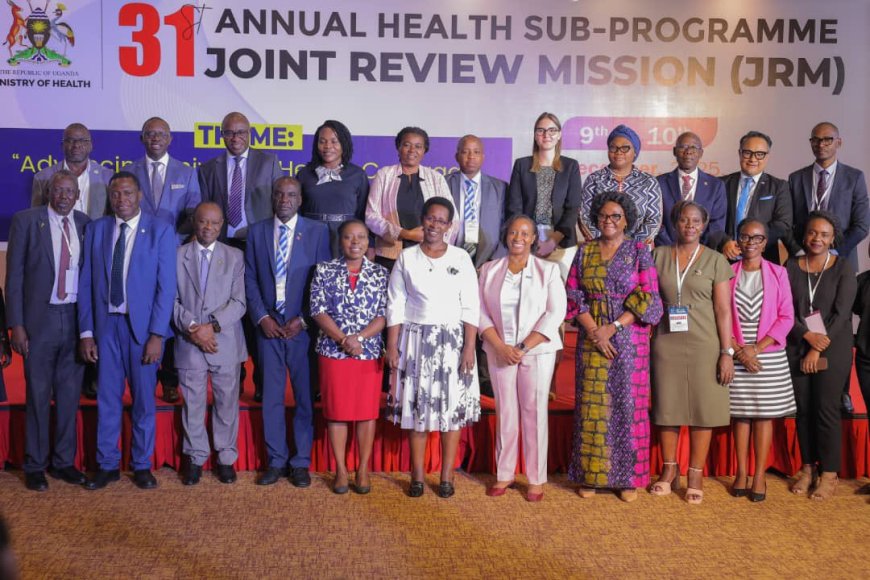
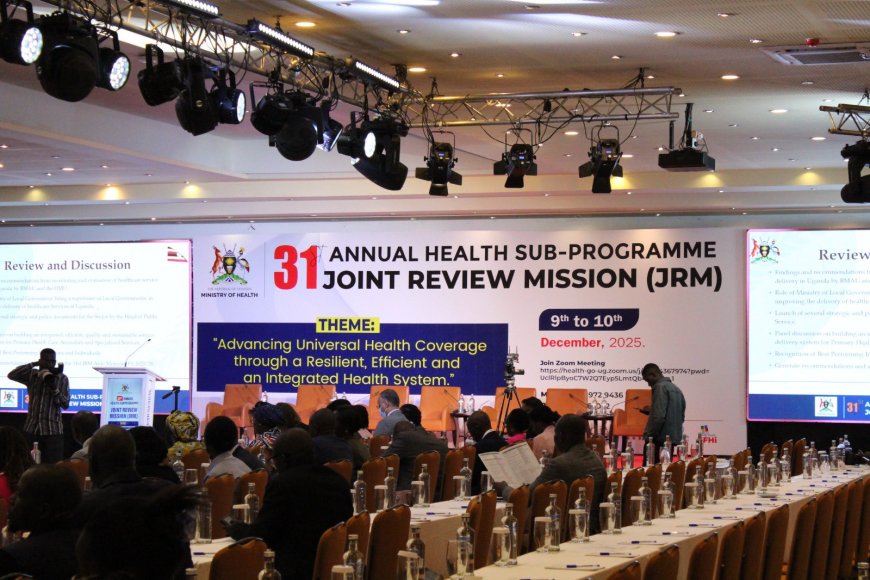
The 31st Annual Health Sub Programme Joint Review Mission (JRM) has officially opened on Tuesday at Speke Resort Munyonyo, bringing together government officials, development partners, and key health sector stakeholders for a two day assessment of Uganda’s progress toward Universal Health Coverage (UHC).
Held under the theme “Advancing Universal Health Coverage through a Resilient, Efficient, and Integrated Health System,” the mission provides a platform to review achievements, identify bottlenecks, and agree on priority actions to accelerate health sector transformation.
Presiding over the opening session as chief guest, Dr. Diana Atwiine, Permanent Secretary at the Ministry of Health, represented the Minister for health Dr. Jane Ruth Acheng, reaffirmed government’s commitment to building a strong and inclusive health system that meets the needs of all Ugandans.
She noted that this year’s review is particularly significant as it marks the final year of the Third National Development Plan (NDP III) and a transition toward renewing national commitments for the next planning cycle.
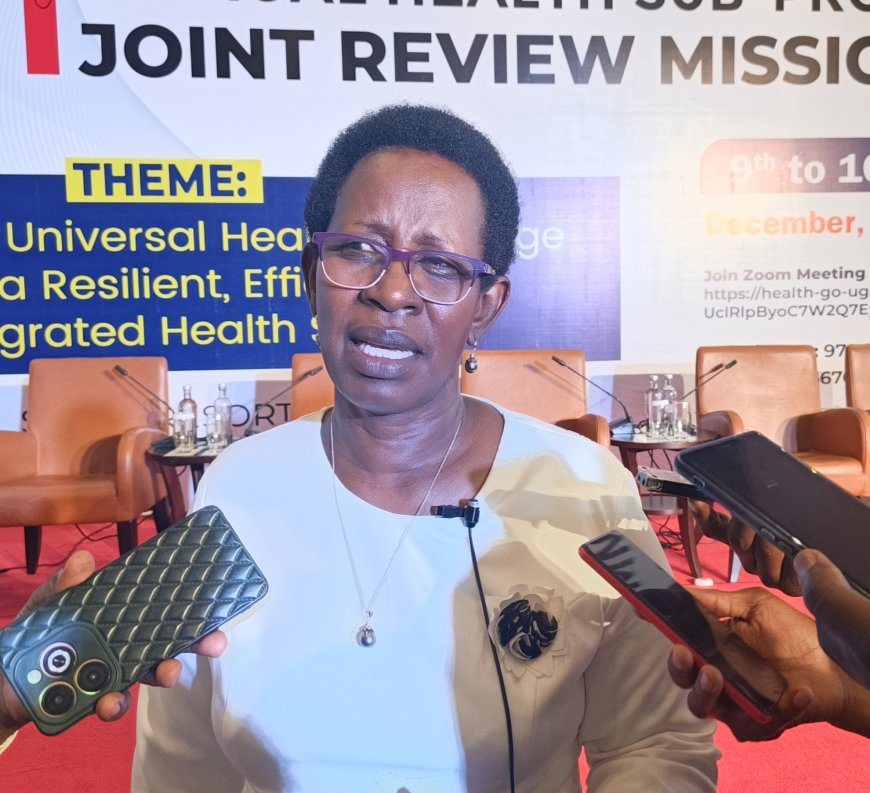
According to Dr. Atwiine, the Ministry recently concluded a midterm review of Uganda’s UHC trajectory, which highlighted substantial gains in health outcomes.
“We have registered notable progress in life expectancy, maternal mortality, under-five mortality, and vaccination coverage,” she said, commending the collaborative efforts of health workers and partners.
However, she emphasized that persistent challenges such as inadequate health financing, inequitable service delivery, and human resource gaps continue to impede faster progress. She urged the sector to intensify efforts to end epidemics and curb the rising burden of non-communicable diseases.
Dr. Atwiine further stressed the need for coordinated implementation, systems integration, deployment of community health extension workers, and regular inspection of households and institutions as central tools for achieving national health targets. She extended appreciation to all partners and technical teams supporting the JRM process.
The opening ceremony also drew a wide range of invited partners, reflecting the collaborative nature of Uganda’s health sector. These included representatives from the private health sector, civil society organizations, and the Uganda Local Government Association, represented by its President Mr. Andrew Moses Awai.
Also in attendance were the Chair of the Health Development Partners Group, Dr. Daniel Alemu, the WHO Country Representative to Uganda, Dr. Yonas Tegegn Woldemariam, and the United States Ambassador to Uganda, Mr. William W. Popp all of whom reaffirmed their commitment to supporting Uganda’s progress toward Universal Health Coverage.
Call for Predictable and Sustainable Health Financing
Beyond her official remarks, Dr. Atwiine underscored the urgency of establishing a resilient and predictable health financing framework. She warned that Uganda’s current financing environment is volatile and heavily dependent on unpredictable external support, exposing households to catastrophic out-of-pocket expenditures.
She reiterated that alternative financing mechanisms, including the long-debated National Health Insurance Scheme, remain a priority for the next five years.
“Global best practices show that general health insurance reduces out-of-pocket spending. After this season, we shall resume national dialogue on the health insurance agenda,” she noted.
Dr. Atwiine added that Uganda is in the process of negotiating terms for regional health cooperation agreements, following examples set by Kenya and Rwanda.
The Permanent Secretary emphasized that human resources are the health sector’s greatest asset and called for leaders across the system to align personal values with institutional goals to strengthen performance.
She highlighted the Ministry’s renewed focus on patient-centered care, anchored on values, quality, excellence, and improved user support. She added that strengthening patient feedback mechanisms and reducing inefficiencies would significantly enhance value for money in health service delivery.
Steering Uganda Toward Universal Health Coverage
The Joint Review Mission is expected to conclude with actionable recommendations to guide planning, budgeting, and reforms as Uganda prepares for the next development cycle. The outcomes are anticipated to play an instrumental role in fast tracking the country’s journey toward Universal Health Coverage.

Benjamin Mwibo is a talented, passionate and creative journalist with a commitment to high quality out put that is factual and researched. Above all Dedicated with a strong desire to identify the truth of the matter.







Comments (0)