
President Yoweri Museveni Wins Seventh Term Electoral Commission Declares Landslide Victory as Opposition Cries Foul
The official announcement, made on Saturday, followed a tense and highly scrutinised election period that unfolded amid a nationwide internet blackout, heavy security deployment and sharp political divisions.
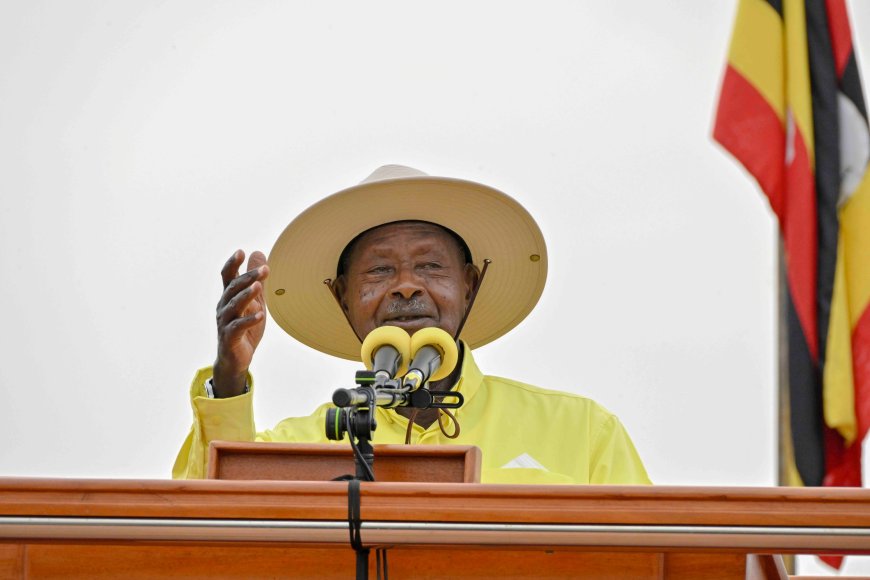
Uganda’s long‑serving President, H.E. Yoweri Kaguta Museveni, has been declared the winner of the 2026 presidential election, securing a seventh term in office after nearly four decades at the helm of the East African nation. According to the Electoral Commission, Museveni, 81, garnered 71.65 percent of the total votes cast, defeating his main challenger, opposition leader and musician‑turned‑politician Robert Kyagulanyi Ssentamu, popularly known as Bobi Wine, who received 24.72 percent.
The official announcement, made on Saturday, followed a tense and highly scrutinised election period that unfolded amid a nationwide internet blackout, heavy security deployment and sharp political divisions.
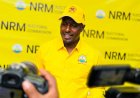
Museveni, who has ruled Uganda since 1986, once again extended his grip on power, reinforcing his status as one of Africa’s longest‑serving leaders. The National Resistance Movement (NRM) candidate campaigned on a platform centred on wealth creation, job creation, commercial agriculture, industrialisation and security, positioning himself as the guarantor of stability and economic growth.
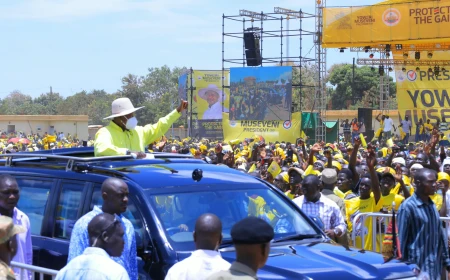
In Kampala and several up‑country towns, pro‑government supporters poured onto the streets to celebrate the victory. At a jubilant rally at the Kampala Cricket Ground, supporters waved NRM flags, danced to campaign songs and praised the president’s leadership.
“I’m really very happy to see he’s won,” said Milton Egessa, a 35‑year‑old teacher attending the rally. “The victory comes because of his hard work, dedication and commitment to the people of Uganda.”
However, the celebrations were matched by deep frustration and anger from the opposition, who rejected the results and accused the state of widespread electoral malpractice.
Bobi Wine Rejects Results, Alleges Fraud and Intimidation
Bobi Wine, who ran under the National Unity Platform (NUP) ticket, dismissed the outcome, alleging massive ballot stuffing, voter intimidation and military interference. On Election Day, he claimed on social media that he had escaped a joint police and army raid on his home.
“Currently, I am not at home, although my wife and other family members remain under house arrest. I know that these criminals are looking for me everywhere, and I am trying my best to keep safe,” Bobi Wine said.
His campaign had been marked by repeated clashes with security forces, with rallies frequently disrupted using tear gas and live ammunition. At least one person was killed during the campaign period, and hundreds of his supporters were arrested.
Internet Shutdown Draws International Criticism
Thursday’s vote took place under a nationwide internet and social media blackout, a move ordered by authorities in the name of national security.
Election observers strongly criticised the shutdown, arguing that it undermined transparency and public confidence in the process.
Former Nigerian President Goodluck Jonathan, who led a joint observer mission from the African Union and other regional bodies, said the blackout:
“Instilled fear and eroded public trust in the electoral process.” Jonathan noted that although observers saw no direct evidence of ballot stuffing, the internet shutdown “disrupted effective observation” and “increased suspicion” around the credibility of the vote, even though Election Day itself was largely peaceful.
Security Clampdown and Deadly Clashes
Following the announcement of results, Kampala remained under a heavy police and military presence as authorities sought to prevent protests.
The opposition said at least 10 people were killed during a security operation at the home of a local opposition lawmaker in Butambala District, about 55 kilometres southwest of Kampala. Police put the death toll at seven, claiming that machete‑wielding opposition supporters had attacked a police station and a vote‑tallying centre.
These incidents added to fears that the post‑election period could descend into violence, echoing tensions seen in previous election cycles.
NRM Dominates Parliamentary Race Beyond the presidency, the National Resistance Movement also secured a commanding lead in parliamentary seats, consolidating its control over Uganda’s legislature. This gives Museveni a strong mandate to push forward his 2026–2031 agenda, which focuses on:
Commercial agriculture and agro‑industrialisation
Manufacturing and value addition
Tourism and services
Youth skilling and employment creation
Infrastructure and energy expansion
Many Ugandans continue to credit Museveni with restoring stability after years of post‑independence turmoil and steering the country through periods of economic growth. Supporters see him as a unifying figure and a defender of national security.
The 2026 election has once again shown that Museveni remains firmly in control.

John Kusolo is a Pastor, Sports Enthusiast and Ugandan journalist with Nile Chronicles News (NCN). With a strong commitment to journalistic excellence, he is recognized for his dedication, goal-oriented approach, and ability to thrive in challenging environments. Kusolo brings focused motivation and professionalism to his reporting and media assignments.





Comments (0)