
UACE 2025: Over 113,000 Qualify for University as UNEB Reports Improved Performance, Low Malpractice Cases
A total of 166,400 candidates registered for the 2025 UACE examinations, up from 141,996 in 2024 — an increase of 24,404 candidates (17.2%). Of those registered, 72,764 (43.7%) were female while 93,636 (56.3%) were male, reflecting the continued gender gap at this level.
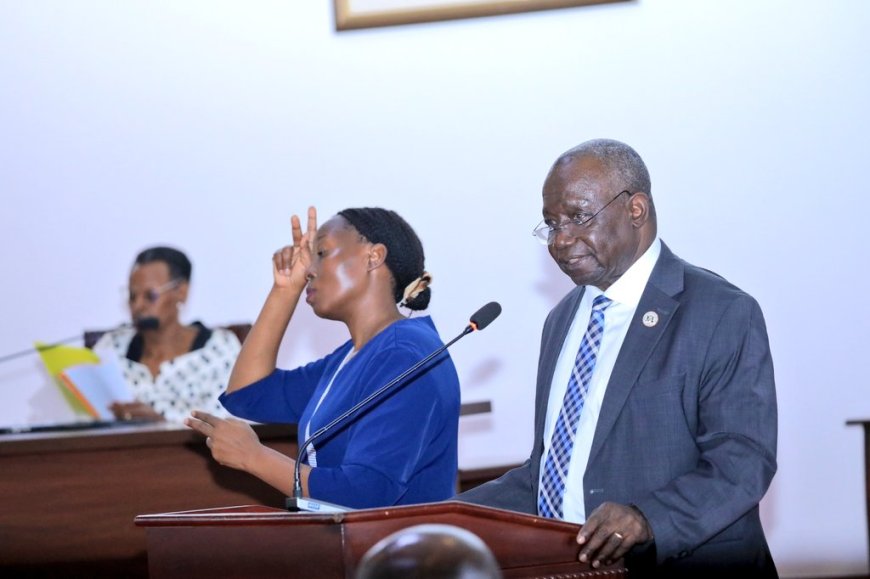
The Executive Director of the Uganda National Examinations Board (UNEB), Dan N. Odongo, has reported an overall improvement in performance in the 2025 Uganda Advanced Certificate of Education (UACE) examinations, with a significant rise in the number of candidates qualifying for university admission.
Increased Enrolment and Examination Centres
A total of 166,400 candidates registered for the 2025 UACE examinations, up from 141,996 in 2024 — an increase of 24,404 candidates (17.2%). Of those registered, 72,764 (43.7%) were female while 93,636 (56.3%) were male, reflecting the continued gender gap at this level.
The number of examination centres also increased by 197 (8.7%), from 2,255 in 2024 to 2,452 in 2025.
In total, 165,172 candidates sat the examinations compared to 140,884 in 2024, representing a 17.2% rise. Among those who appeared, 72,374 (43.8%) were female and 92,798 (56.2%) were male.
Odongo noted that female candidature at UACE has consistently remained significantly lower than that of males, mirroring overall enrolment trends.
Malpractice Cases Remain Low
The UNEB Executive Director reported that cases of examination malpractice remained minimal.
Malpractice was recorded in 47 out of 2,452 centres, involving 351 candidates — representing just 0.2% of the total candidature. The cases mainly involved receiving assistance during Science practical papers, possession of unauthorized materials, and impersonation.
In line with Section 5(2)(b) of the UNEB Act, Cap 259, results of implicated candidates have been withheld pending the completion of investigations.
The Board is currently concluding hearings for Primary Leaving Examination (PLE) cases and will commence hearings for UCE cases starting March 16, 2026.
University Qualification Numbers Rise
Odongo announced an overall improvement in 2025 compared to 2024 in terms of Principal level passes.
A total of 113,291 candidates (68.6%) attained at least two Principal passes — the minimum requirement for admission to degree programmes — up from 92,273 candidates (65.5%) in 2024. This represents an additional 21,018 candidates qualifying for university admission.
He observed that the increase in successful candidates implies that more university places — approximately 21,000 additional slots — may be required to absorb the growing number of qualifiers.
Under current regulations, a candidate requires at least a Subsidiary pass in a Principal subject to qualify for the UACE certificate. Overall, 68.9% of candidates qualified for the award of the UACE certificate.
For diploma-level programmes in tertiary and Technical and Vocational Education and Training (TVET) institutions — where one Principal and two Subsidiary passes are considered — 145,129 candidates (87.9%) qualify.
Performance by Subject
The 2025 results show notable improvements in Mathematics, Chemistry, Agriculture, Geography, and Economics. Biology and Literature in English also registered gains.
Overall, grades in Science subjects improved markedly compared to the Humanities.
However, performance declined significantly in Entrepreneurship Education, Christian Religious Education, Fine Art, and Physics.
Despite improvements in Sciences, Odongo highlighted persistent challenges in practical subjects. He attributed weaknesses to inadequate practical exposure, misinterpretation of experimental procedures, incorrect data collection, and failure to present findings graphically due to improper scaling of axes.
Candidates also struggled with making deductions from observations and writing correct chemical equations. Additionally, many were unable to relate scientific concepts to real-life applications. There were also concerns that some teachers continue to skip certain topics, particularly in areas such as Physical Chemistry.
Humanities Challenges
In the Humanities, performance challenges persist largely due to poor interpretation of questions and misunderstanding of key concepts required for appropriate responses.
In History, for example, candidates demonstrated weak analytical and evaluative skills, poor logical flow of content, and limited use of relevant examples.
Religious Education also remains problematic, particularly in application-based tasks requiring candidates to connect teachings from Holy Books to everyday life situations.
Odongo emphasized that across all subjects, a recurring weakness is the inability of candidates to apply acquired knowledge to real-life contexts.
Detailed subject reports will be compiled and shared with respective schools to guide improvement strategies.
Gender Performance Patterns
Female candidates outperformed males at the Principal level pass (A–E) in most Humanities subjects, as well as in Mathematics, Physics, General Paper, Subsidiary Mathematics, and Subsidiary ICT.
However, at the highest grade level (A passes), male candidates dominated in Mathematics and Science subjects.
Odongo noted that female entries in Sciences and Mathematics remain lower than those of males, reflecting the broader trend of fewer female candidates at UACE level.
Special Needs Education
A total of 540 Special Needs Education (SNE) candidates — 274 males and 266 females — registered for the 2025 UACE examinations, compared to 437 candidates in 2024.
This increase signals growing inclusivity in access to advanced secondary education.
Odongo described the 2025 UACE results as encouraging, citing improved Principal pass rates and stronger performance in several key subjects, particularly in Sciences.
However, he cautioned that systemic challenges remain — especially in practical competence, conceptual understanding, and application of knowledge to real-life situations.
As candidature continues to rise significantly, the education sector now faces the parallel challenge of expanding university and tertiary capacity to accommodate the growing number of qualified students.

John Kusolo is a Pastor, Sports Enthusiast and Ugandan journalist with Nile Chronicles News (NCN). With a strong commitment to journalistic excellence, he is recognized for his dedication, goal-oriented approach, and ability to thrive in challenging environments. Kusolo brings focused motivation and professionalism to his reporting and media assignments.














Comments (0)