
Civil Society Raises Mixed Reactions to 2026/27 National Budget Framework Paper
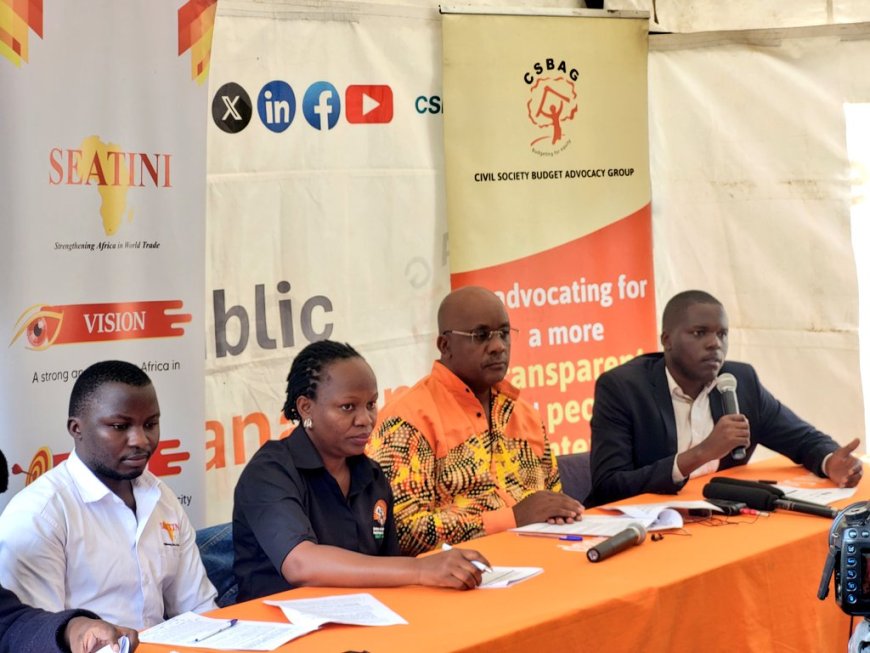
Civil Society Organizations under the umbrella of the Civil Society Budget Advocacy Group (CSBAG) have expressed mixed reactions to the National Budget Framework Paper (NBFP) for the Financial Year 2026/27, warning that while government is prioritizing capital intensive investments, critical social sectors continue to face funding cuts.
These concerns have been raised by the Executive Director of CSBAG, Julius Mukunda, during a press conference held at the organization’s offices in Kampala.
Tuesday, Mukunda noted that the NBFP is anchored on the theme, “Full Monetization of the Ugandan Economy through Commercial Agriculture, Industrialization, Expanding and Broadening Services, Digital Transformation and Market Access,” and acknowledged that the framework outlines key projections on government revenues, expenditures, debt levels, implementation strategies, potential risks and policy proposals.
He commended the Ministry of Finance, Planning and Economic Development for tabling the NBFP before Parliament in December 2025 in line with Section 9(3) of the Public Finance Management Act (PFMA), 2015 (as amended), describing it as an important step in promoting transparency and accountability in public finance management.
Mukunda further applauded government for maintaining macroeconomic stability, citing economic growth of 6.3 percent in FY 2024/25, up from 6.1 percent in FY 2023/24, with projected growth of between 6.5 and 7 percent in the current financial year. He attributed the performance to continued investments in the oil and gas sector, improved exports, infrastructure development and generally stable economic conditions.
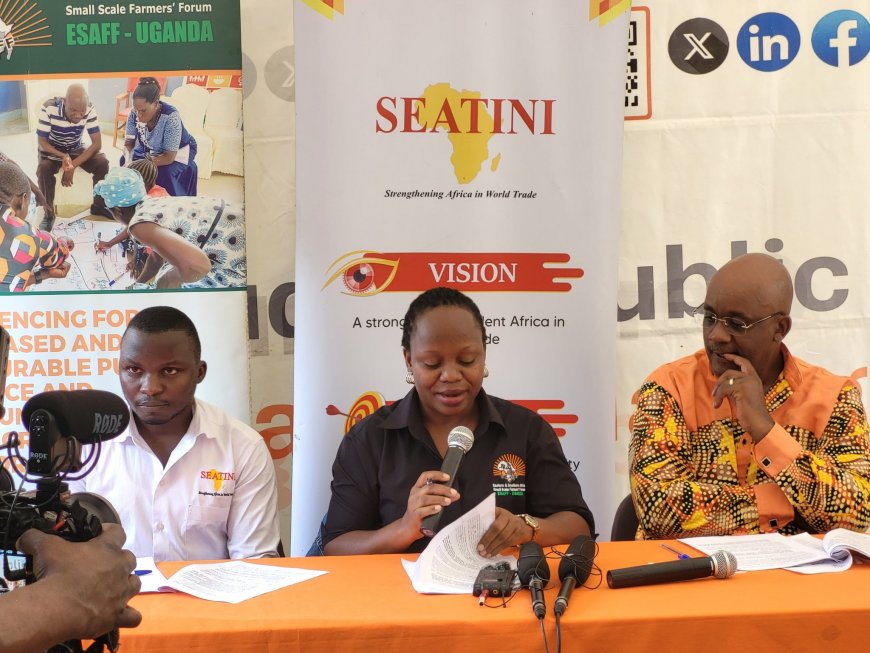
He also welcomed the half-year budget performance for FY 2025/26, noting that by mid-year, government had released UGX 42.03 trillion representing 58 percent of the revised budget of UGX 80.04 trillion an indication that implementation was broadly on track.
However, Mukunda expressed concern over the projected decline in the overall resource envelope for FY 2026/27, which is expected to drop by UGX 2.976 trillion to UGX 69.4 trillion, largely due to reduced budget financing, lower domestic borrowing and declining external support.
While domestic revenue is projected to increase to UGX 40.09 trillion, Mukunda warned that this positive trend may not be sufficient to offset the impact of cuts across several critical programmes.
He revealed that only eight out of eighteen government programmes are projected to receive increased funding, with Sustainable Extractives Industry Development registering the highest increment of 94 percent.
In contrast, eleven programmes including Human Capital Development, Agro-Industrialization, Digital Transformation, Tourism Development and Manufacturing are facing significant budget cuts.
Mukunda cautioned that the pattern of allocations suggests a continued bias toward capital-intensive investments at the expense of social development sectors such as health, education and social protection.
On programmes aligned to the Agro-Industrialization, Tourism, Mining and Science, Technology and Innovation (ATMS) strategy, Mukunda noted that total allocations will stand at UGX 3.96 trillion, representing six percent of the national budget. However, this remains UGX 797 billion below the UGX 4.756 trillion proposed under the Fourth National Development Plan (NDP IV).
He called on Parliament and government to reconsider budget priorities to ensure that investments in human capital and strategic growth sectors are adequately funded to support inclusive and sustainable development.

Benjamin Mwibo is a talented, passionate and creative journalist with a commitment to high quality out put that is factual and researched. Above all Dedicated with a strong desire to identify the truth of the matter.









Comments (0)