
“Action Matters”: Bulambuli MP-Elect Biara Weighs In on Opposition Election Setbacks
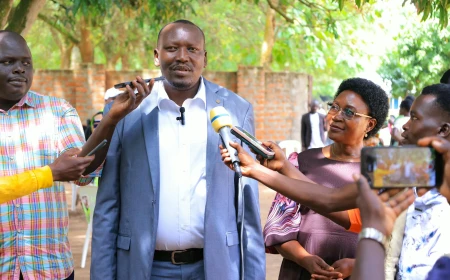
Speaking during a media engagement, Biara suggested that some leaders widely celebrated for their debating skills may have lost public confidence because their visibility in Parliament did not translate into practical benefits for their constituencies.

Bulambuli County MP-elect Hon. Biara Emmanuel has attributed the recent electoral defeat of several prominent opposition legislators to what he described as a disconnect between rhetoric and tangible service delivery, arguing that voters are increasingly prioritizing measurable impact over parliamentary debate.
Speaking during a media engagement, Biara suggested that some leaders widely celebrated for their debating skills may have lost public confidence because their visibility in Parliament did not translate into practical benefits for their constituencies.
He pointed to high-profile figures such as Hon. Ibrahim Ssemujju Nganda and Hon. Mathias Mpuuga as examples of lawmakers often praised for their eloquence, but whose electoral setbacks, he believes, reflect a shift in voter expectations.
According to Biara, the political landscape is evolving, with communities placing greater emphasis on leaders who demonstrate consistent grassroots presence and deliver concrete improvements in people’s lives. He argued that while parliamentary debate is an important component of democratic governance, it must be matched by visible action on issues affecting constituents.
“Voters today are more attentive to results,” Biara said, emphasizing that citizens want leaders who address everyday challenges such as livelihoods, infrastructure development, and access to social services. In his view, strong communication skills alone are no longer sufficient to secure long-term political support.
The MP-elect framed his remarks within a broader reflection on accountability and representation, noting that communities increasingly expect leaders who are practical, responsive, and deeply engaged at the local level. He described this trend as a sign of a maturing electorate that is evaluating leaders based on performance rather than prominence.
Biara underscored that his own political philosophy centers on service delivery and community empowerment. He pledged to prioritize development-oriented initiatives in Bulambuli District, stressing that leadership credibility should be built on outcomes that residents can directly experience.
His comments have ignited discussion within political circles. Supporters of his view argue that elections are becoming more performance-driven, rewarding leaders who maintain close ties with their constituents and deliver visible progress. Others caution that parliamentary debate remains vital to democratic oversight, lawmaking, and holding the executive accountable, and should not be undervalued.
Political analysts note that the tension between legislative advocacy and constituency service is not new, but recent electoral outcomes may be intensifying scrutiny on how leaders balance the two roles. As Uganda’s political environment continues to evolve, expectations surrounding representation appear to be shifting toward a hybrid model that demands both articulate policy engagement and demonstrable local impact.
As he prepares to assume office, Biara Emmanuel says his immediate focus will be translating campaign promises into actionable programs. He maintains that sustainable political support depends on consistent delivery and meaningful engagement with constituents. “Our leadership must be judged by what it achieves,” he said, reiterating his belief that action-oriented governance will define political success in the years ahead.

John Kusolo is a Pastor, Sports Enthusiast and Ugandan journalist with Nile Chronicles News (NCN). With a strong commitment to journalistic excellence, he is recognized for his dedication, goal-oriented approach, and ability to thrive in challenging environments. Kusolo brings focused motivation and professionalism to his reporting and media assignments.









Comments (0)