
UBOS-New Poverty Data Reveals Deep Inequalities as Government Urged to Rethink Policy Priorities
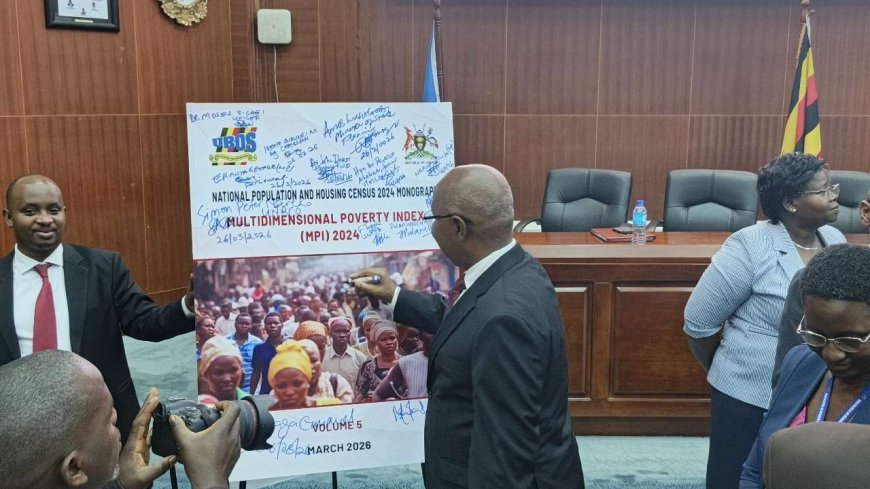
Uganda’s latest multidimensional poverty findings have revealed persistent inequalities in living conditions across the country, prompting renewed calls for evidence-based planning and targeted policy interventions to address deprivation beyond income levels.
According to data released by the Uganda Bureau of Statistics, the country’s Multidimensional Poverty Index (MPI) stands at 0.270, indicating that a significant portion of the population continues to experience overlapping forms of deprivation in areas such as health, education, and access to basic services.
The report highlights stark regional disparities, with Karamoja registering the highest deprivation level at 0.569, while Kampala recorded one of the lowest levels, reflecting comparatively better living conditions in urban centres.
Findings show that, nationally, 27 out of every 100 Ugandans are deprived across multiple dimensions simultaneously, underscoring the complexity of poverty beyond traditional income measures.
The data points to critical gaps in access to essential services, with health insurance coverage emerging as the most significant deprivation factor, affecting 52.6 percent of the population. This is closely followed by limited access to modern cooking fuel and technology at 51.6 percent, challenges that are more pronounced in rural areas.
Experts note that these indicators highlight structural issues that require long-term investment in social services, infrastructure, and inclusive economic systems.
Speaking at the official dissemination of the report at Statistics House in Kampala, State Minister for Finance Amos Lugolobi emphasized the importance of translating statistical insights into actionable policy. He noted that the availability of baseline data provides government planners with a clear opportunity to design targeted interventions that address the most pressing areas of deprivation.
“The challenge now lies with how effectively we utilise this data. The figures show we are making progress, but there is still work to be done in addressing the underlying drivers of poverty,” he said.
In his remarks, Chris Mukiza underscored the significance of the MPI in measuring progress towards the United Nations Sustainable Development Goals, particularly SDG 1 on ending poverty in all its forms.
He observed that disparities between newly created and more established districts suggest uneven distribution of resources, with benefits often concentrated among local elites, and urged policymakers to use the findings to guide equitable resource allocation.
Members of Parliament and development partners also called for stronger integration of statistical data into planning processes. Geoffrey Ekanya emphasized the need to incorporate climate-related loss and damage into national budgeting, noting its growing impact on vulnerable communities dependent on natural resources such as agriculture, forestry, and fishing.
The Acting Chairperson of the UBOS Board, Irene Birungi Mugisha, described reliable statistics as a strategic asset for national development, enabling informed decision-making and effective implementation of government programmes.
Development partners, including the United Nations Development Programme, reaffirmed the importance of the MPI as a tool for designing inclusive policies, improving social protection systems, and strengthening climate resilience initiatives.
The MPI analysis, based on national census data, examines multiple dimensions of deprivation including access to clean water, energy sources, housing conditions, education, employment, and financial services.
By moving beyond income-based measures, the index provides a more comprehensive understanding of poverty and offers policymakers a clearer roadmap for targeted interventions aimed at improving livelihoods across the country.

Benjamin Mwibo is a talented, passionate and creative journalist with a commitment to high quality out put that is factual and researched. Above all Dedicated with a strong desire to identify the truth of the matter.












Comments (0)