
Hon. Obua Calls for Evidence-Based Governance to Boost Service Delivery
Obua made the remarks while representing Justine Kasule Lumumba, the Minister in Charge of General Duties in the Office of the Prime Minister, at the launch of the National Evaluation Capacities Index (INCE) held at the Imperial Royale Hotel. The event was organized by the Office of the Prime Minister (OPM) in partnership with the Uganda Evaluation Association.
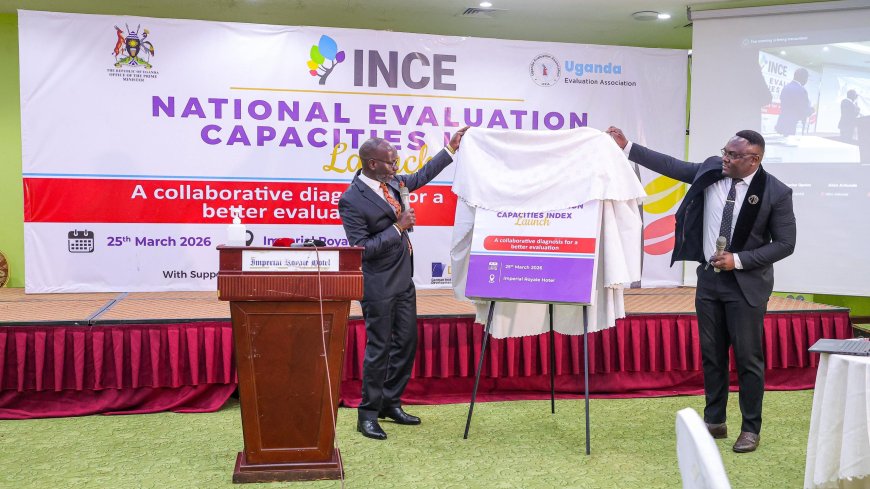
KAMPALA — The Government Chief Whip, Hon. Denis Hamson Obua, has called for a stronger evaluative culture across public institutions, urging government agencies to anchor their decisions on credible evidence in order to enhance service delivery and accountability.
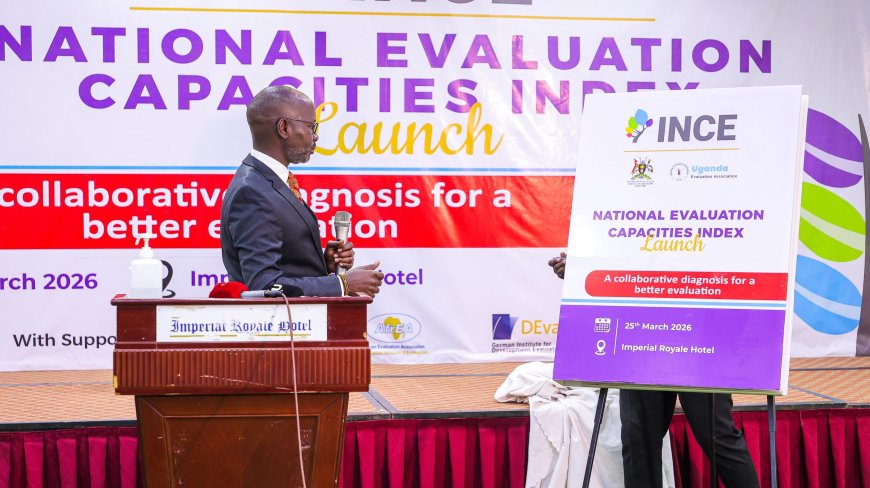
Obua made the remarks while representing Rt. Hon. Justine Kasule Lumumba, the Minister in Charge of General Duties in the Office of the Prime Minister, at the launch of the National Evaluation Capacities Index (INCE) held at the Imperial Royale Hotel. The event was organized by the Office of the Prime Minister (OPM) in partnership with the Uganda Evaluation Association.
Strengthening an Evaluative Culture
In his address, Obua underscored that under the leadership of the National Resistance Movement government, cultivating an evaluative culture is considered a fundamental condition for effective and efficient public service delivery.
He explained that an evaluative culture is built on shared values and institutional practices that prioritize the systematic collection, analysis, and use of data to inform development programs and policy decisions. According to Obua, this approach ensures that government actions are grounded in impartial and reliable evidence rather than assumptions.
“A government that listens, measures, and learns is better positioned to deliver results,” Obua noted, emphasizing that evaluation must move beyond compliance reporting to become an active driver of policy refinement and program improvement.
Public Participation and Accountability
Obua also highlighted the long-standing emphasis by President Yoweri Museveni on public participation in government development programs. He described citizen engagement as central to ensuring that state interventions respond to the real needs and priorities of communities.
“Public participation allows government to better understand the needs of the people and to design development interventions that address those needs effectively. This makes it important to continuously generate evidence through monitoring, reviews, and evaluation,” he said.
He added that structured feedback mechanisms and participatory evaluation processes help bridge the gap between policy formulation and grassroots realities, thereby strengthening public trust in government institutions.

From Reports to Results
A key message from the launch was the need to ensure that evidence generated through evaluations does not remain confined to reports and shelves. Obua stressed that findings from assessments and reviews must actively inform budgeting, planning, and policy adjustments.
“Evidence must not gather dust in reports; it must inform decisions, shape budgets, and drive the continuous improvement of public service delivery,” he said.
He pointed to the Government Performance Assessment framework as an example of how evaluation tools are already being utilized to track progress and improve accountability within public institutions. Such mechanisms, he noted, are vital in ensuring that public resources are used efficiently and that development outcomes are measurable.
INCE as a Reform Tool
The National Evaluation Capacities Index (INCE) is expected to serve as a practical tool for assessing and strengthening evaluation systems across government institutions in Uganda. By identifying gaps and benchmarking performance, the index aims to enhance institutional capacity to generate, manage, and utilize evidence effectively.
Obua expressed optimism that the initiative will reinforce Uganda’s commitment to transparency and results-oriented governance. He emphasized that the success of the INCE will depend on the active involvement of the entire evaluation ecosystem — including government ministries, Parliament, oversight bodies, civil society organizations, universities, and development partners.
The launch of the INCE signals a renewed push by the OPM to institutionalize evaluation practices as a core component of public administration. Stakeholders at the event noted that building national evaluation capacity is critical not only for accountability but also for ensuring that development interventions yield tangible and sustainable results.

As Uganda continues to implement key national development priorities, leaders at the launch stressed that evidence-based decision-making will be indispensable in driving inclusive growth and improving the quality of life for citizens.

John Kusolo is a Pastor, Sports Enthusiast and Ugandan journalist with Nile Chronicles News (NCN). With a strong commitment to journalistic excellence, he is recognized for his dedication, goal-oriented approach, and ability to thrive in challenging environments. Kusolo brings focused motivation and professionalism to his reporting and media assignments.
















Comments (0)