
President Museveni Rallies Makindye Voters, Warns Against Violence and Reaffirms Commitment to Grassroots Wealth Creation
Addressing a large gathering of supporters, President Museveni cautioned against political violence, describing it as a direct threat to economic progress and social transformation. He stressed that development cannot thrive in an environment of unrest, noting that essential public services such as roads, health facilities and education depend on resources generated through productive economic activity.
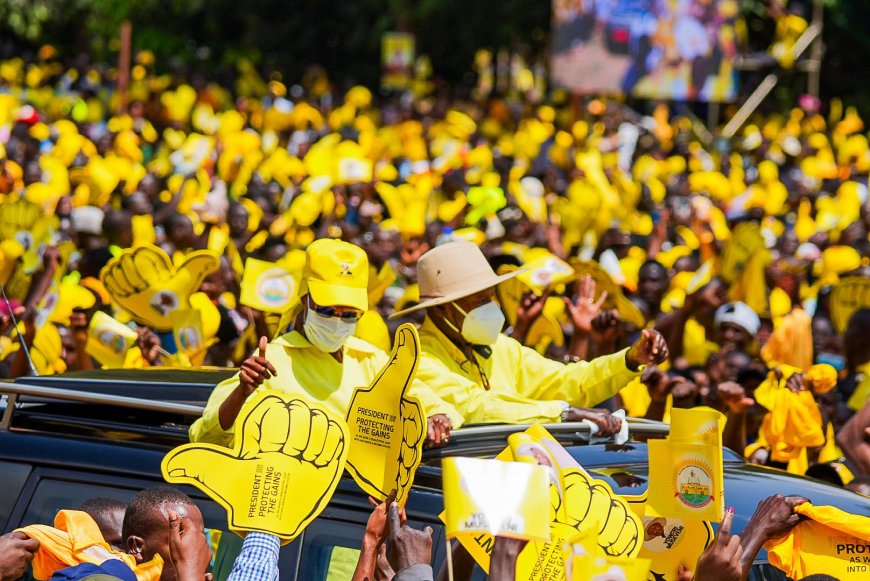
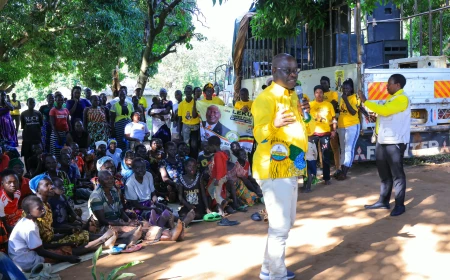
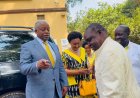
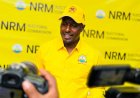
Makindye Division, Kampala — President Yoweri Kaguta Museveni, accompanied by the First Lady Maama Janet Museveni, on Tuesday held a major campaign rally in Makindye Division, where he presented the NRM 2026–2031 Manifesto and urged residents to safeguard peace as the foundation for wealth creation, jobs and national development.
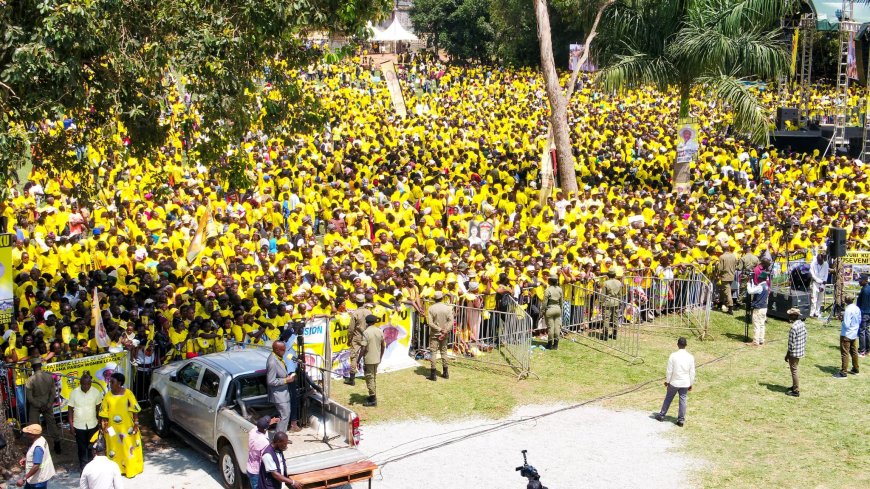
Addressing a large gathering of supporters, President Museveni cautioned against political violence, describing it as a direct threat to economic progress and social transformation. He stressed that development cannot thrive in an environment of unrest, noting that essential public services such as roads, health facilities and education depend on resources generated through productive economic activity.
“Those who promote violence are enemies of wealth, jobs and development,” Museveni said. “Money for roads and services comes from wealth, and wealth comes from production. Unrest destroys everything.”
The President reiterated that peace remains one of the National Resistance Movement’s strongest achievements, enabling Uganda to attract investment, expand infrastructure and create employment opportunities. He warned that instability undermines investor confidence and disrupts livelihoods, particularly in urban areas like Makindye, where trade, services and small enterprises are key drivers of household incomes.
Museveni emphasized that Uganda’s development strategy is anchored on ensuring stability first, followed by deliberate investment in wealth creation across communities.
A key focus of the Makindye rally was the Parish Development Model (PDM), which Museveni described as the government’s most direct intervention to lift households out of subsistence and into the money economy. He explained that under PDM, the parish is the primary decision-making unit, with Parish SACCOs responsible for mobilising savings, issuing loans and supporting income-generating activities.
The President acknowledged complaints from residents regarding alleged misuse of PDM funds by some SACCO committee members. He assured the public that such concerns are being taken seriously, revealing that investigations are ongoing.
“We are aware of complaints about committees serving themselves,” Museveni said. “These matters are under investigation, and corrective action will be taken where wrongdoing is found.”
He further disclosed that the Minister of Local Government will personally engage parishes in Makindye Division to strengthen accountability, ensure transparency and guide communities on proper management of PDM resources.
Museveni urged residents to actively participate in parish-level decision-making, reminding them that PDM is designed to empower communities, not individuals. He encouraged voters to closely monitor their SACCO leaders and demand accountability to ensure the programme achieves its intended purpose of transforming household incomes.
The President emphasized that responsible leadership at the grassroots is essential for PDM to succeed and deliver lasting economic impact.
Concluding his address, President Museveni called on the people of Makindye to vote for the NRM in the forthcoming general elections, arguing that continued NRM leadership is necessary to protect existing gains and accelerate development.
He framed the election as a choice between continuity in peace and economic progress versus instability that could reverse years of investment and growth.
The Makindye rally forms part of Museveni’s wider Kampala campaign tour, during which he has consistently highlighted the NRM’s record on peace, infrastructure development and wealth creation, while positioning the Parish Development Model as the cornerstone of Uganda’s next phase of socio-economic transformation.

John Kusolo is a Pastor, Sports Enthusiast and Ugandan journalist with Nile Chronicles News (NCN). With a strong commitment to journalistic excellence, he is recognized for his dedication, goal-oriented approach, and ability to thrive in challenging environments. Kusolo brings focused motivation and professionalism to his reporting and media assignments.




Comments (0)