
Zambian Expert Osward Chanda Calls for Stronger Governance, Financing and Innovation at UWEWK 2026
Speaking under the theme, “Water and Environment for an Inclusive and Prosperous Uganda,” Chanda framed water and environmental sustainability as central pillars for economic transformation, social stability and long-term prosperity.
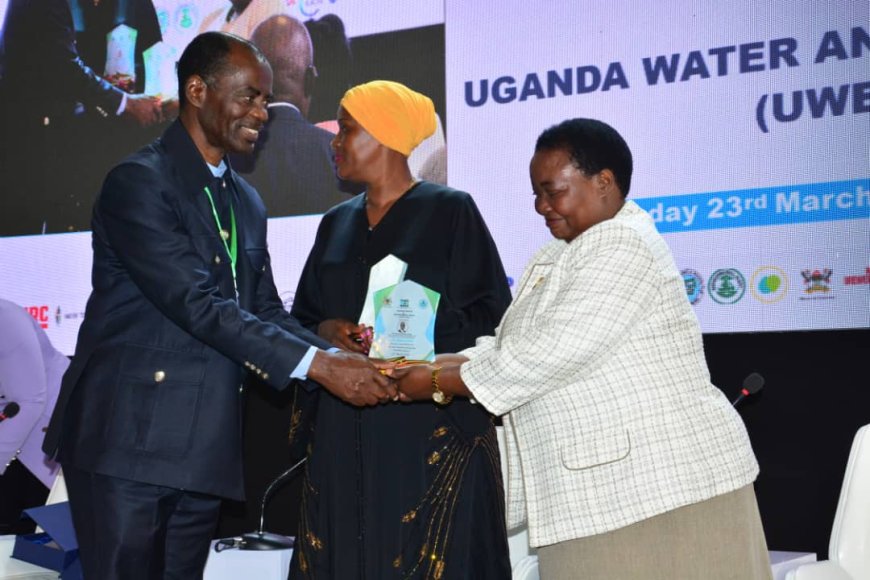
KAMPALA, UGANDA | March 23, 2026 — A powerful call for institutional strengthening, inclusive planning and innovative financing defined Day One of the 9th Uganda Water and Environment Week (UWEWK) 2026, as Zambian water sector expert Osward M. Chanda delivered a keynote address urging African countries to rethink governance and delivery systems in the water and environment sector.
Speaking under the theme, “Water and Environment for an Inclusive and Prosperous Uganda,” Chanda framed water and environmental sustainability as central pillars for economic transformation, social stability and long-term prosperity.
Mounting Pressures on Water and Environment
Chanda highlighted three major stressors shaping the future of water and environmental management:
Climate change and variability
Rapid population growth, projected to rise from 100 million to 250 million across parts of the region
Accelerated urbanisation, currently estimated at 5.036 percent (2024)
He warned that these trends are compounding existing vulnerabilities, particularly in urban centres where self-supply systems, infrastructure gaps and low technology uptake are straining service delivery.
“These pressures demand more than incremental reforms. They require systemic transformation,” he emphasized.
From Global Commitments to Local Action
Chanda situated Uganda’s efforts within broader international and continental frameworks, including the Sustainable Development Goals (SDGs), the African Union’s Agenda 2063, and the 2026 Year of Water Action.
However, he challenged stakeholders to interrogate whether global declarations have been adequately domesticated into national and local plans.
“Are these plans sufficiently financed? What tangible results have we achieved from previous frameworks?” he posed.
He noted that while policy alignment exists on paper, implementation gaps persist—particularly at the local government level where governance weaknesses, limited accountability, and asymmetry in planning and execution undermine impact.
Governance as the Cornerstone
A recurring theme in Chanda’s address was governance. He described sector leadership as the “foundational cornerstone” for effective water and environmental management. Strong governance, he argued, requires:
Clear policy, legislative and institutional frameworks
Enforcement capacity
Professional accountability
Oversight mechanisms
Active citizen participation
He further emphasized the importance of managing both upward accountability (to central government and development partners) and downward accountability (to communities and service users).
“Without effective governance frameworks, even the best-designed strategies will fail,” he cautioned.
Financing the Future of Water
Chanda stressed that financing remains one of the most critical constraints in the sector. He called for a strengthened case for investment in water and environment, supported by robust project designs and feasibility studies.
Key financing strategies he proposed include:
Improving internal budgetary efficiency
Leveraging blended finance mechanisms
Enhancing risk management to lower borrowing costs
Ensuring cost containment through strong oversight
Tapping into multilateral development institutions for competitive, scalable and timely financing
He underscored the need for multilateralism in finance, noting that coordinated regional and global financing can unlock more competitive capital for infrastructure development.
Addressing Sector Challenges
Among the most pressing challenges identified were:
Weak governance, especially at local government level
Low prioritisation of water and environment investments
Limited resilience of systems and infrastructure
Poor integration of development plans
Inadequate capacity to deliver
Chanda also called for revisiting sector systems, including payment mechanisms, to enhance sustainability and accountability.
Capacity Development for Transformation
With water and environmental challenges becoming increasingly complex, Chanda advocated for a comprehensive capacity development strategy targeting:
Institutions — strengthening decentralised structures
Personnel — building competence-based human resources
Systems — improving functionality and operational efficiency
He emphasized evidence-based decision-making, powered by reliable data systems, as essential for transformative results.
“Transformational change must be evidence-driven,” he said, adding that decentralised management capacity is critical for responsive service delivery.
Innovation and Technology as Game Changers
Innovation featured prominently in his presentation.
Chanda called for incentivising the uptake of new technologies to lower costs and improve efficiency, particularly in infrastructure development and service delivery.
He pointed to the importance of digitalisation and data-based decision-making in modern sector management.
He also stressed:
Strong partnerships between government, research institutions, private sector actors and community-led initiatives
Scalability and sustainability of innovations Internship and youth engagement programs to build long-term sector capacity
Leadership that understands the value of information technology and artificial intelligence
As social media and digital platforms drive greater public demand for accountability and service quality, he urged service providers to adapt accordingly.
Putting a Human Face to Inclusiveness
In a passionate appeal, Chanda emphasized that inclusiveness must go beyond rhetoric.
He urged policymakers to understand inclusiveness within context and place vulnerable communities at the centre of planning.
“Put a human face to the vulnerable. Let that fuel your passion,” he said.
He argued that mainstreaming inclusiveness is not only a moral imperative but also a strategic tool for mobilising finance and strengthening institutional credibility at national and global levels.
A Call to Seize the Moment
In his conclusion, Chanda outlined a roadmap for sustainable sector transformation:
Institutional strengthening
Understanding the political economy of water and environment
Strengthening professional accountability
Creating incentives for science and technology
Leveraging youth innovation Building delivery capacity
Strengthening partnerships for scale and impact
Mainstreaming inclusiveness across all sector interventions
He urged Uganda and other African nations to seize emerging opportunities and align governance, finance, innovation and capacity development into a cohesive reform agenda.
As UWEWK 2026 progresses, Chanda’s keynote sets a clear tone: achieving an inclusive and prosperous future through water and environmental stewardship will depend not just on commitments, but on governance reform, strategic financing, technological innovation and people-centred implementation.

John Kusolo is a Pastor, Sports Enthusiast and Ugandan journalist with Nile Chronicles News (NCN). With a strong commitment to journalistic excellence, he is recognized for his dedication, goal-oriented approach, and ability to thrive in challenging environments. Kusolo brings focused motivation and professionalism to his reporting and media assignments.













Comments (0)