
U.S. Treasury Sanctions Rwanda Defence Force Over Alleged Support to M23 in Eastern DRC
The sanctions, announced by the Treasury’s Office of Foreign Assets Control (OFAC), target the RDF as an institution and senior officials Vincent Nyakarundi, Ruki Karusisi, Mubarakh Muganga, and Stanislas Gashugi.
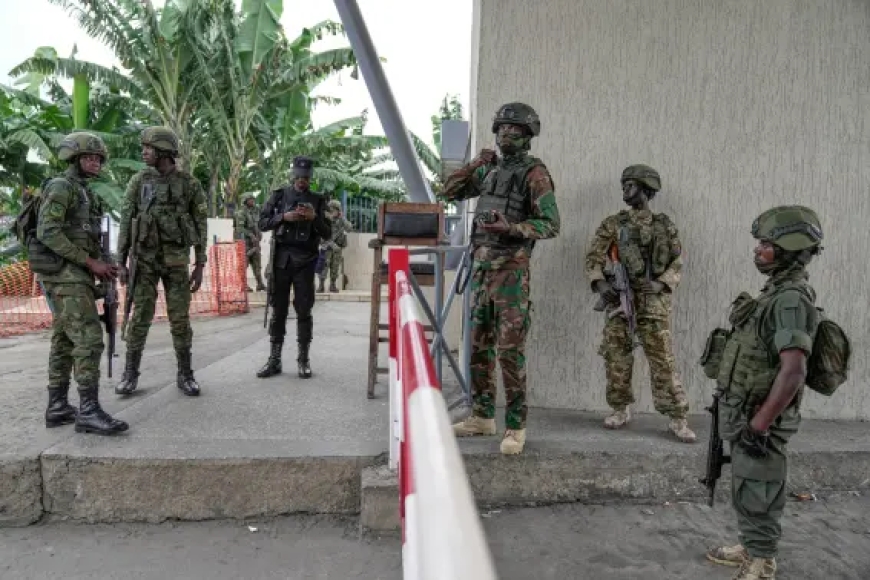
Washington, March 2, 2026 — The U.S. Department of the Treasury has imposed sweeping sanctions on the Rwanda Defence Force (RDF) and four of its senior commanders, accusing the force of backing the rebel group March 23 Movement (M23) in eastern Democratic Republic of the Congo (DRC).
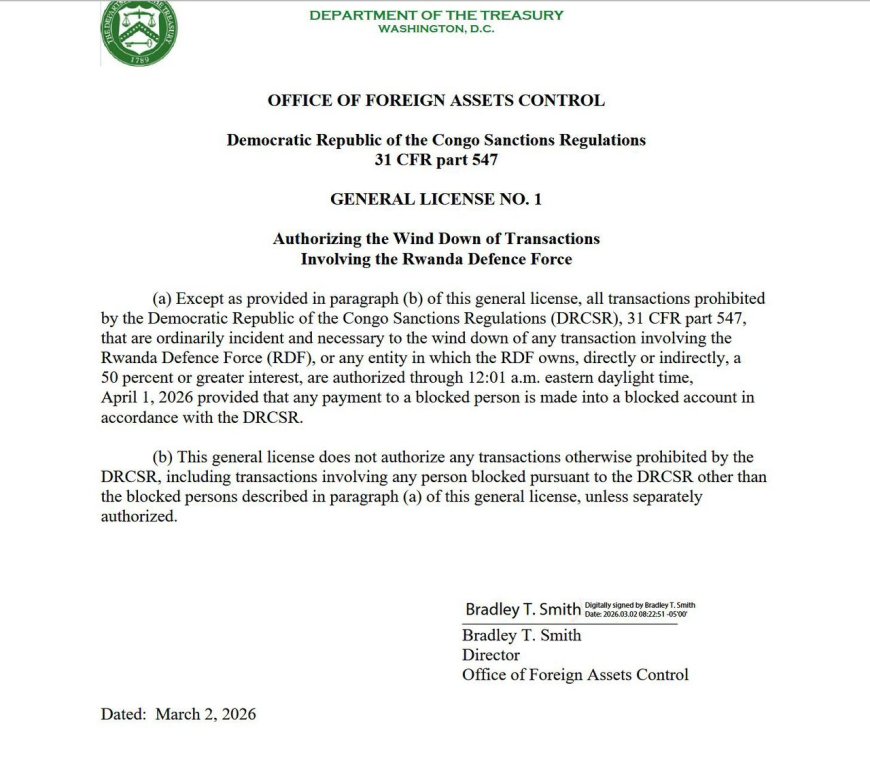
The sanctions, announced by the Treasury’s Office of Foreign Assets Control (OFAC), target the RDF as an institution and senior officials Vincent Nyakarundi, Ruki Karusisi, Mubarakh Muganga, and Stanislas Gashugi. Washington says the move is aimed at reinforcing peace efforts under the recently signed Washington Accords and curbing escalating violence in the mineral-rich eastern DRC.
Accusations of Direct Military Support
According to the U.S. Treasury, the RDF has been actively supporting, training, and fighting alongside M23, a group already sanctioned by both the United States and the United Nations. The rebel movement has been linked to human rights abuses, including extrajudicial killings, arbitrary arrests, torture, and mass displacement.
U.S. authorities allege that RDF troops have been deployed in large numbers across eastern DRC and have provided advanced military equipment to M23, including drone technology, air defense systems, and GPS-jamming capabilities. The RDF is also accused of facilitating recruitment and training operations for M23 fighters.
The conflict has intensified in key strategic areas such as Goma and Bukavu, provincial capitals that M23 has reportedly seized in recent offensives. Days after the signing of the Washington Accords, M23 briefly captured Uvira, a strategic border town near Burundi, triggering civilian casualties and fresh displacement.
Senior Officials Named
The Treasury designated the following RDF officials: Vincent Nyakarundi, Army Chief of Staff of the RDF, described as a senior commander overseeing land operations linked to M23 support. Ruki Karusisi, Major General and Commander of the RDF’s 5th Infantry Division, formerly head of Special Operations.
Mubarakh Muganga, Chief of Defence Staff, who previously served as Army Chief of Staff during alleged RDF operations in eastern DRC.
Stanislas Gashugi, current Special Operations Force Commander, appointed in March 2025.
The designations were made under Executive Order 13413, as amended, which authorizes sanctions against individuals and entities deemed to threaten peace, security, or stability in the DRC.
Sanctions and Their Impact
Under the measures, all property and interests in property of the designated individuals and the RDF that are in the United States or under the control of U.S. persons are blocked. U.S. persons are prohibited from engaging in transactions with the sanctioned parties unless specifically authorized by OFAC.
The sanctions also extend to any entities owned 50 percent or more by the designated individuals. Violations may result in civil or criminal penalties, and non-U.S. persons can face secondary sanctions if they facilitate prohibited transactions.
U.S. Treasury officials emphasized that sanctions are intended not as punishment but as a tool to encourage behavioral change and compliance with international peace agreements.
Regional and Diplomatic Implications
The announcement comes amid growing international concern over the possibility of a broader regional conflict in the Great Lakes region. In a joint statement by the International Contact Group for the Great Lakes, the United States condemned the military operations of both M23 and the RDF and called for the immediate withdrawal of Rwandan forces from eastern DRC.
The allegations also center on claims that Rwanda has gained access to mineral-rich territories in eastern Congo in exchange for supporting M23’s armed campaign—an accusation Kigali has historically denied in similar past disputes.
The sanctions signal heightened diplomatic pressure from Washington as it seeks to enforce the commitments made under the Washington Accords, signed in the presence of Presidents Donald J. Trump, Félix Tshisekedi of the DRC, and Paul Kagame of Rwanda.
A Critical Moment for the Region
The eastern DRC has long been plagued by armed insurgencies fueled by competition over land, ethnicity, and valuable mineral resources. The renewed confrontation involving M23 and alleged Rwandan support threatens to derail fragile peace initiatives and deepen humanitarian suffering.
With thousands displaced and tensions simmering along the DRC-Burundi border, the effectiveness of the sanctions — and the response from Kigali — will likely shape the next phase of regional stability efforts.
As Washington escalates financial pressure on Rwanda’s military leadership, attention now turns to whether diplomatic engagement or further punitive measures will define the path forward in one of Africa’s most volatile conflict zones.

John Kusolo is a Pastor, Sports Enthusiast and Ugandan journalist with Nile Chronicles News (NCN). With a strong commitment to journalistic excellence, he is recognized for his dedication, goal-oriented approach, and ability to thrive in challenging environments. Kusolo brings focused motivation and professionalism to his reporting and media assignments.









Comments (0)