
President Museveni Links Nile Basin Challenges to Underdevelopment in Lecture to Egyptian Military Delegation
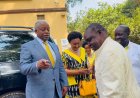
While delivering a lecture at the National Leadership Institute Kyankwanzi (NALI) on Thursday morning, the President hosted a delegation from the Egyptian Armed Forces Staff and Command College, engaging them on a wide range of strategic and developmental issues affecting the region.
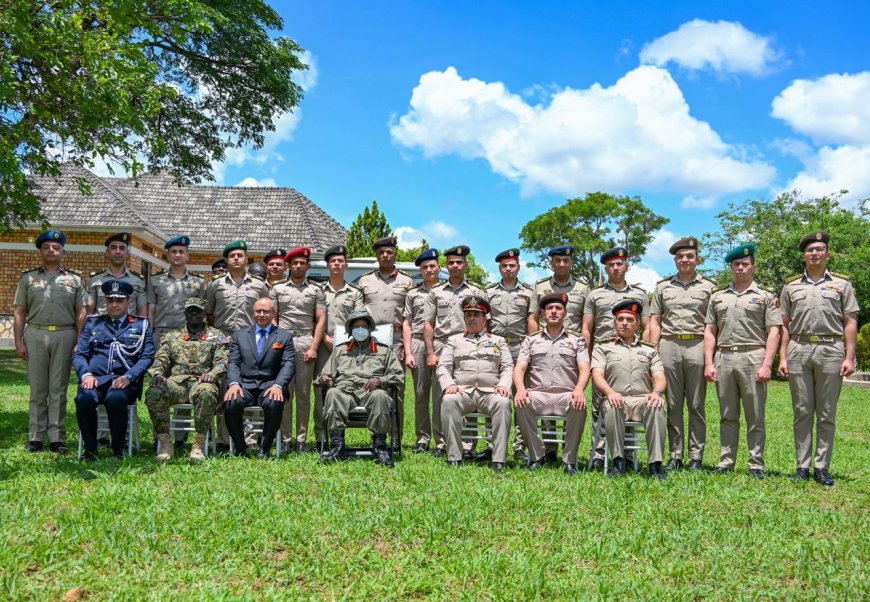
President Yoweri Kaguta Museveni has emphasized that the long-standing questions surrounding the Nile Basin can only be sustainably addressed through socio-economic transformation, rather than reliance on outdated colonial-era agreements.
While delivering a lecture at the National Leadership Institute Kyankwanzi (NALI) on Thursday morning, the President hosted a delegation from the Egyptian Armed Forces Staff and Command College, engaging them on a wide range of strategic and developmental issues affecting the region.
Museveni underscored that the core challenge facing the Nile Basin is rooted in underdevelopment across tropical Africa. He pointed to limited access to electricity, low levels of industrialisation, and the growing impact of climate change as the primary pressures on water resources.
“The real issue is not the old colonial agreements,” Museveni noted, arguing that such frameworks are no longer central to resolving modern-day concerns. Instead, he called for accelerated electrification and industrialisation as the pathway to environmental protection and sustainable water management.
According to the President, expanding electricity access would reduce reliance on biomass energy sources such as firewood, thereby preserving forests that play a critical role in water catchment and climate regulation. Industrialisation, he added, would create structured economic growth while enabling more efficient use of natural resources.
Beyond environmental and economic issues, Museveni also shared Uganda’s broader historical and ideological journey. He highlighted the country’s commitment to rejecting sectarian and identity-based politics in favor of nationalism and Pan-Africanism—principles he said are essential for long-term stability and unity across the continent.
He further pointed to Uganda’s focus on socio-economic transformation and the pursuit of African integration as key pillars that have guided the country’s leadership over the years.
The visiting Egyptian delegation also toured the Source of the Nile in Jinja, one of Uganda’s most iconic landmarks. Museveni expressed satisfaction that the group had the opportunity to experience the country’s natural beauty firsthand.
He welcomed the delegation to Uganda and wished them a productive stay, reaffirming the importance of continued dialogue and cooperation among African nations on shared strategic resources such as the Nile.

John Kusolo is a Pastor, Sports Enthusiast and Ugandan journalist with Nile Chronicles News (NCN). With a strong commitment to journalistic excellence, he is recognized for his dedication, goal-oriented approach, and ability to thrive in challenging environments. Kusolo brings focused motivation and professionalism to his reporting and media assignments.









Comments (0)