
UNBS Media Workshop Showcases Artificial Intelligence in Quality and Compliance Reporting
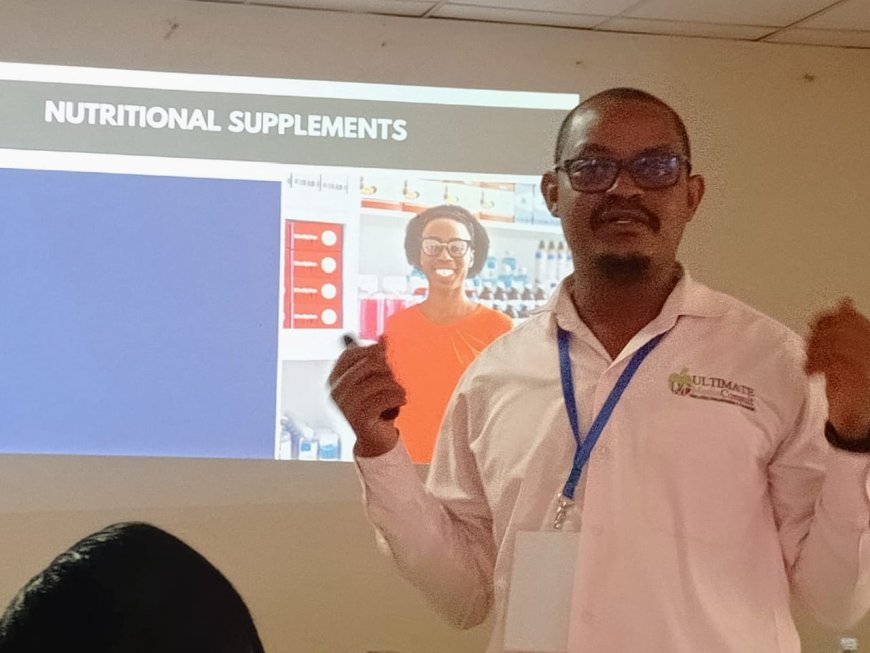
On Day Two (2nd March 2026), participants were taken through a practical session on Artificial Intelligence (AI) in quality reporting by Edward Tumwine from Ultimate Multimedia Consult.
The Uganda National Bureau of Standards (UNBS), in partnership with TradeMark Africa and funded by UK Aid, has rolled out the 2026 Media Training on Standards and Metrology Reporting, a specialised capacity-building programme designed to strengthen journalism around quality infrastructure, product certification, compliance, and consumer protection.
The four-day training, which began on 1st March 2026 and will run until 4th March 2026 in Mukono, brings together media practitioners from across the country to enhance their understanding of standards, inspection systems, and the critical role of quality assurance in trade and public safety.
AI in Quality Reporting Takes Centre Stage
On Day Two (2nd March 2026), participants were taken through a practical session on Artificial Intelligence (AI) in quality reporting by Edward Tumwine from Ultimate Multimedia Consult.
Tumwine introduced journalists to the growing role of AI tools in analysing business and UNBS datasets, simplifying technical standards language, and visualising “Quality Trends” for digital audiences. He explained that AI can significantly support media practitioners in interpreting complex data and generating strong, data-driven story ideas.
According to Tumwine, AI can assist journalists in identifying trends in inspection reports, detecting repeated non-compliance patterns among businesses, and summarising lengthy regulatory documents into concise, reader-friendly content.
Turning Complex Data into Compelling Stories
During the session, participants explored three key applications of AI in standards reporting:
1. Data Analysis
AI tools can help journalists:
Identify trends within inspection reports.
Detect recurring compliance failures in specific sectors or product categories.
Generate potential story angles from sampled UNBS datasets.
Summarise long and technical regulatory reports for quicker newsroom use.
By inputting sample datasets into AI platforms, reporters can prompt the system to highlight patterns and propose investigative leads.
2. Simplification of Technical Language
Standards and regulatory documents are often highly technical. AI can help break down complex terminology and translate policy provisions into clear, public-friendly explanations, enabling journalists to make standards reporting more accessible to ordinary consumers.
3. Data Visualisation
AI tools can also convert inspection data into charts and trend visuals suitable for digital platforms and social media. This makes quality reporting more engaging and easier for audiences to understand at a glance.
Among the tools highlighted were ChatGPT and Google Gemini for trend identification and story generation, as well as QuillBot for content summarisation and Plotly for data visualisation.
AI Assists — Journalists Must Verify
While underscoring the efficiency AI brings to modern journalism, Tumwine cautioned participants against overreliance on technology.
“AI assists. It does not verify truth. Verification remains human,” he emphasised.
He warned that AI systems can misinterpret technical data if prompts are poorly framed or if datasets are incomplete. Publishing AI-generated visuals without proper verification, he noted, could undermine credibility. He also highlighted data privacy concerns, urging journalists to handle sensitive business and regulatory data responsibly.
Building Capacity for Data-Driven Standards Reporting
The 2026 Media Training on Standards and Metrology Reporting is part of broader efforts to empower journalists to report more accurately and consistently on quality assurance, consumer protection, and compliance enforcement.
With increasing volumes of inspection data and regulatory information available, AI tools present an opportunity for journalists to deepen investigative reporting, identify systemic gaps in compliance, and present evidence-based stories that promote accountability in the marketplace.
As the training continues in Mukono through 4th March 2026, participants are expected to gain further insights into standards, metrology, and innovative reporting tools that will strengthen public awareness on product quality and safety.
The initiative underscores the growing recognition that informed and well-equipped journalists are key partners in safeguarding consumer interests and supporting Uganda’s quality infrastructure.

John Kusolo is a Pastor, Sports Enthusiast and Ugandan journalist with Nile Chronicles News (NCN). With a strong commitment to journalistic excellence, he is recognized for his dedication, goal-oriented approach, and ability to thrive in challenging environments. Kusolo brings focused motivation and professionalism to his reporting and media assignments.
















Comments (0)